
South Perry historical walking tour
Step into South Perry’s Story
Follow the trail of historic stops and uncover the stories that bring the district to life.
Overview
Welcome to the South Perry Historical Walking Tour!
Our goal is to share the people, places, and events that have shaped South Perry—from its earliest days to the vibrant neighborhood it is today.
History is an ongoing process of discovery. The information presented in the South Perry Historical Walking Tour is based on available historical records, interviews with local residents, and the research by neighborhood volunteers. As new information becomes available, this content may be updated.
Thank you to everyone who contributed their time, knowledge, memories, and research to make this project possible.
Use the map below to find each stop along the tour and explore what makes it unique.
Historical Walking Tour Locations

-
Stop 1: Original Liberty Park
Original Liberty Park
Did You Know?
- The original 21-acre Liberty Park property was bounded by Third Avenue (north), Fifth Avenue (south), Arthur Street (east), and Perry Street (west).
- Many of Spokane’s most beloved parks were designed as part of a comprehensive park system created by the renowned Olmsted Brothers Landscape Architects of Brookline, Massachusetts. The firm developed Spokane’s parks plan in 1908, including designs for Liberty Park.
- The Liberty Park Ruins, located north of Interstate 90 at the corner of Third Avenue and Arthur Street, mark the original west entrance to Liberty Park. The site preserves remnants of the historic park, including basalt stone walls, stairways, scenic overlooks, and the foundations of the promenade and stone pergola.
- Liberty Park was officially named in 1898 after 165 residents from the adjacent neighborhood signed a petition to name the park.
- Liberty Park became home to Spokane’s first public swimming pool in 1920.
- Spokane’s ongoing commitment to parks for everyone is evidenced by the Spokane Parks Levy, a $240 million, 20-year initiative approved by voters in November 2025 to enhance every park in every neighborhood across the City of Spokane.
Liberty Park’s Story
In the early twentieth century, Liberty Park reflected a broader movement to bring natural beauty into growing industrial cities. Spokane’s population grew rapidly in the late 1800s, fueled by the railroad, mining, timber, and agricultural industries. New residents, including many immigrants from Europe and Asia, created a demand for housing, transportation, and public gathering spaces. In response, in 1897, mining entrepreneur F. Lewis Clark donated 21 acres of land in east Spokane for a public park. Neighborhood residents named it Liberty Park, a name that soon became synonymous with the surrounding community.
In 1908, Spokane adopted the Olmsted Brothers’ comprehensive parks plan, reflecting their belief that parks should be “for the greatest good of the greatest number”: places where people of every social and economic background could enjoy nature, recreation, and respite from city life. Liberty Park attracted visitors from across Spokane and neighboring towns. Streetcars and the interurban trolley brought families to the park to picnic, attend sporting events, ice skate in winter, and enjoy its remarkable scenery, while nearby residents could enjoy the splendor of the park from the front porches of their homes along Fifth Avenue.
The magnificent basalt formations scattered throughout Liberty Park are among the park’s most distinctive natural features and offer a glimpse of the dramatic landscape that made the park one of Spokane’s most popular destinations. Formed by ancient lava flows and carved by the Ice Age floods, these rock formations became one of the park’s highlights.
The park changed dramatically in 1965 when the Washington State Department of Transportation acquired 18 of the original 21 acres to construct Interstate 90, dividing both the park and the surrounding neighborhood. Although much smaller today, Liberty Park continues to serve the community with a public pool, library, disc golf course, playgrounds, and more.
Learn More
Then and Now: Liberty Park
Spokesmen Review, April 9, 2023Then and Now: Liberty Park Swimming Pool
Spokesmen Review, July 18, 2021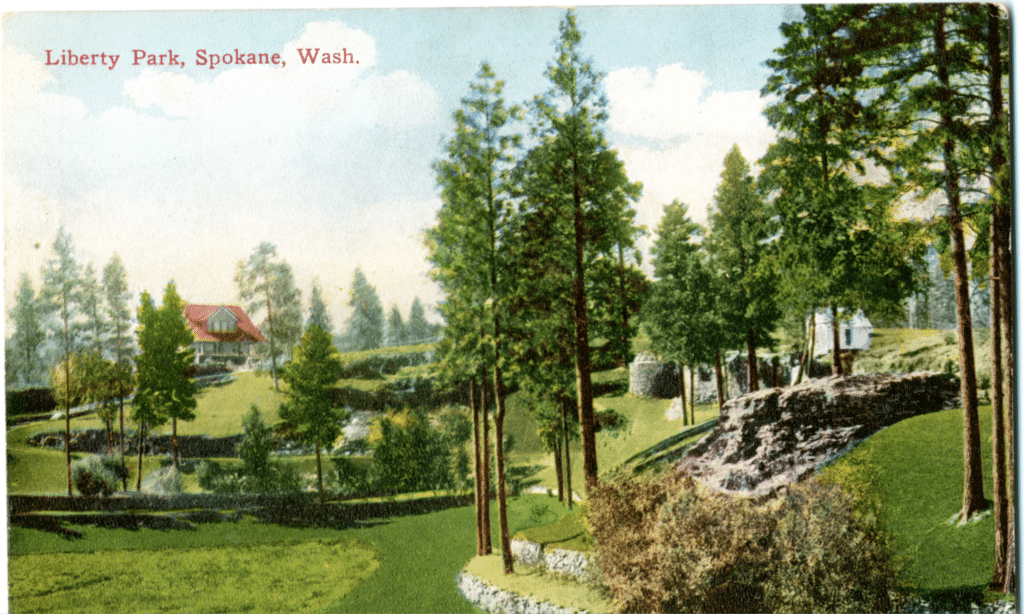
This postcard captures the natural beauty of Liberty Park. (Photo ca. 1900/1910.)
Source: Postcard collection courtesy of Inland Northwest Special Collections, Spokane Public Library. Publisher John W. Graham & Co.
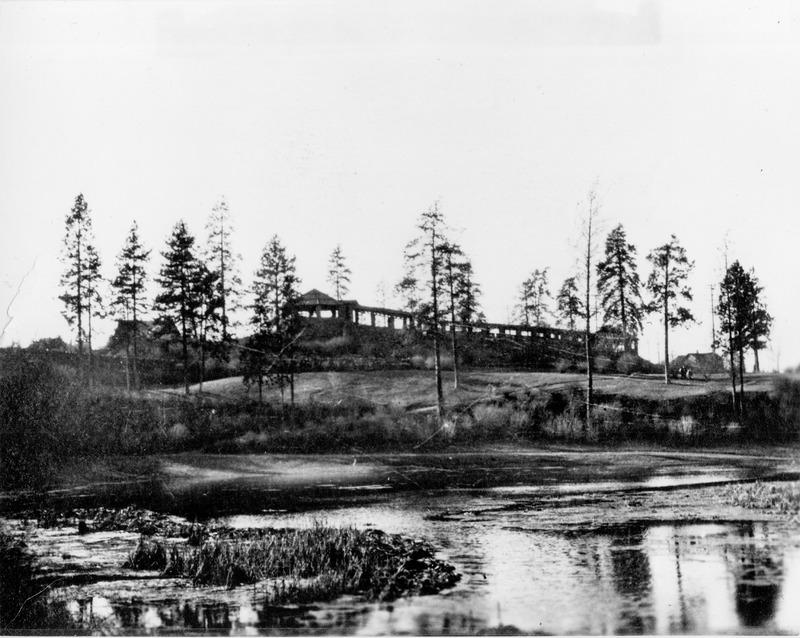
Old Liberty Park’s arbored terrace, looking west. (Photo ca. 1910/1940.)
Source: Courtesy of Inland Northwest Special Collections, Spokane Public Library.
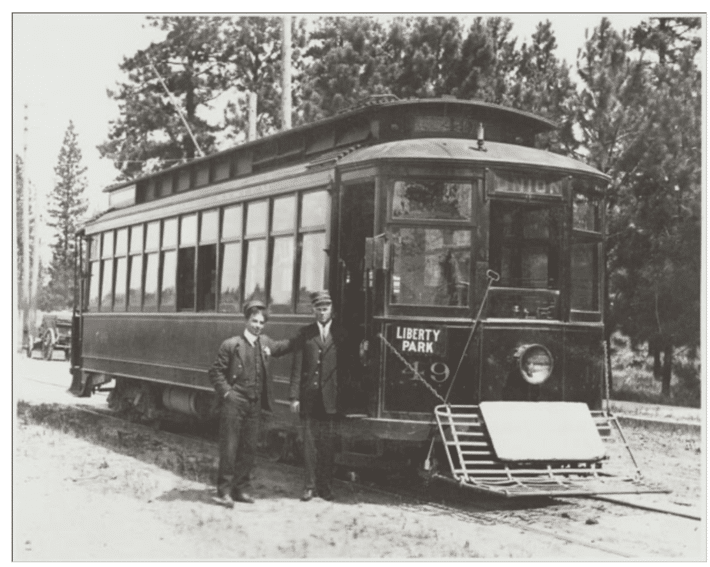
Liberty Park once had a dedicated trolley line. (Photo ca. 1918.)
Source: Photo courtesy of Spokane City/County Historic Preservation Office
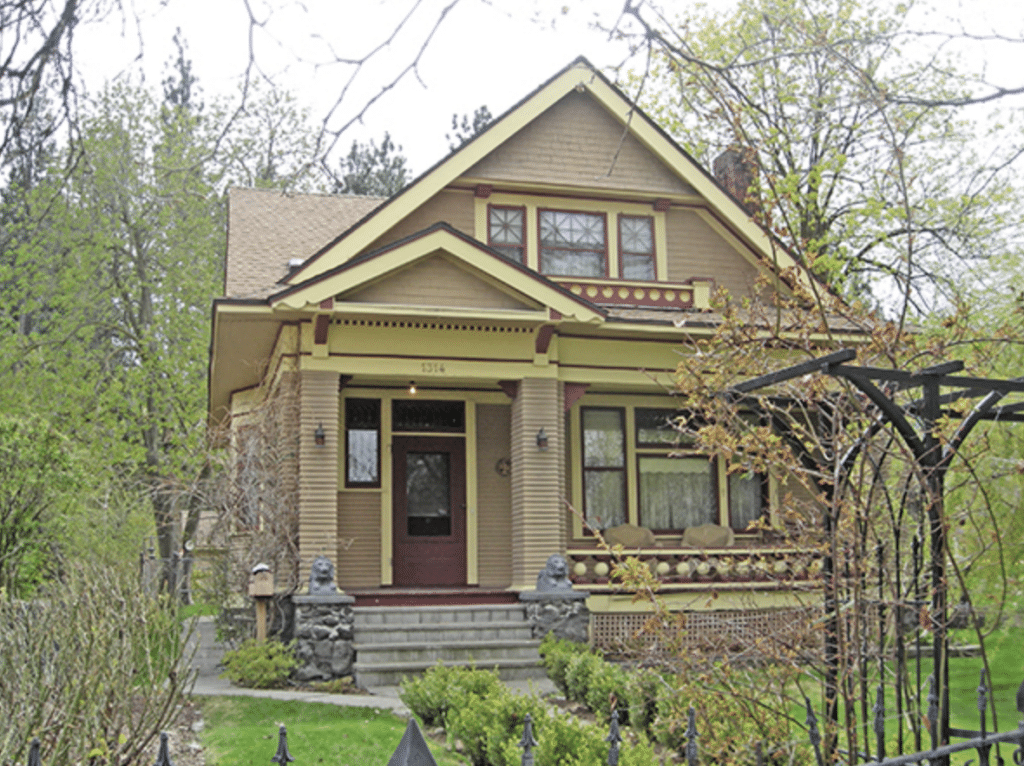
This home on Fifth Avenue, overlooking the original Liberty Park, was constructed in 1907 for Henry M. Hart who served as principal for South Central High School, now known as Lewis and Clark.
Source: Photo courtesy of Spokane City/County Historic Preservation Office.
-
Stop 2: Bethel African Methodist Episcopal Church
Bethel African Methodist Episcopal Church
Did You Know?
- Bethel AME is the second-oldest African American church in Washington State and is part of the African Methodist Episcopal Church whose founding marked the first time African Americans established and governed a national Protestant denomination. More than a place of worship, the church became a center for education, community leadership, and the fight for freedom and civil rights in an era of slavery and widespread racial discrimination.
- The church and the adjacent affordable housing complex reflect the longstanding history of inclusivity in the Liberty Park neighborhood.
- Housing discrimination—including redlining, racially restrictive covenants, and discriminatory real estate practices—limited where many Black families could purchase homes. As a result, East Central became the center of Spokane’s African American community for much of the twentieth century.
The Bethel AME Story
Nestled at the entrance to the South Perry District, this historic church is the second-oldest African American congregation in Washington State. In 1794, minister and religious leader Richard Allen founded the African Methodist Episcopal (AME) Church in Philadelphia, Pennsylvania, establishing the first independent Black denomination in the United States and playing a central role in establishing a self-governing Black church during a period of widespread racial discrimination in American religious life. The formation of independent Black denominations in the U.S. provided an empowering and historical liberation for Black Americans.
In 1890, Reverend A.C. Augustus sought to continue this legacy by organizing Bethel AME Church in Spokane. Early congregations met in the home of Mrs. D.F.C. Washington, and the church’s first locations were established in downtown Spokane. Architectural remnants, including windows from earlier sanctuaries, are incorporated into the present building.
In 1972, the church expanded its mission by constructing a 56-unit affordable housing complex alongside its current sanctuary. Together, the church and housing complex reflect a longstanding tradition of community support and inclusivity in the Liberty Park neighborhood. In recognition of the congregation’s 105th anniversary, the housing complex was renamed the “Richard Allen Apartments,” and Laura Street was redesignated as “Richard Allen Court.”
Bethel AME Church continues to serve as a center for spiritual, political, and social life, and has been described as “a cradle for many of Spokane’s pioneering Black leaders, solidifying its enduring legacy.” (Benjamin D. Watson, Sr., Pastor of Bethe AME Church, 2026).
The history of the Black community in South Perry is closely linked to the East Central neighborhood, which emerged as Spokane’s primary Black residential district during the era of redlining and racial property covenants in the mid-20th century. Redlining, named for the practice of marking neighborhoods on maps used by lenders and insurers, refers to the discriminatory practice of withholding financial services from minority communities. Racially restrictive property covenants placed legally enforceable clauses in property deeds that barred non-white and minority buyers from purchasing or occupying certain properties.
Bethel AME Church and Calvary Baptist Church, which is the oldest African American church in Washington state, were both established in 1890 and played central roles in community life. Reverend Peter B. Barrow, founder of Calvary Baptist Church, also maintained a residence east of Liberty Park. While East Central—including South Perry—was home to a diverse working-class and immigrant population, it became a vital center where Black families established churches, businesses, and community institutions in response to exclusion from other parts of the city.
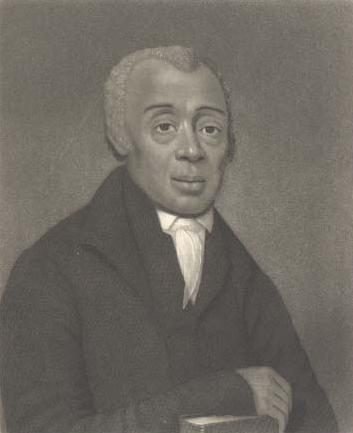
Richard Allen (1760-1831) founded the African Methodist Episcopal Church (AME) in 1974, the first independent Black denomination in the United States.
Source: Photo courtesy of Kean Collection/Getty Images
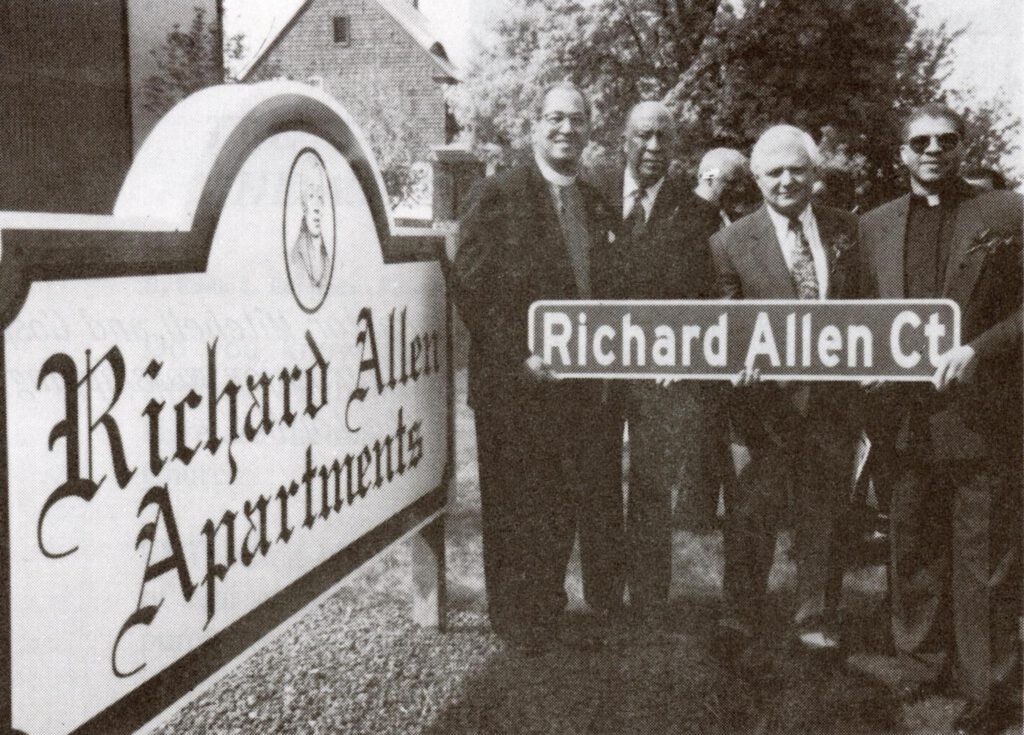
In honor of the founder, Laura Street was renamed Richard Allen Court in 1996. (Photo ca. 1996.)
Source: Photo courtesy of Bethel AME Church, Anniversary Souvenir Booklet, “Bethel African Methodist Church: 105 Years of Kingdom Building! 1890-1995”
-
Stop 3: Liberty Park Florist & Greenhouse
Liberty Park Florist & Greenhouse
Did You Know?
- Domenico and Julia Alice’s business initially featured locally grown vegetables and flowers sold straight from their family home.
- Established in 1928, Liberty Park Florist and Greenhouse is the longest-running family business in South Perry.
- The East Central neighborhood, which includes South Perry, was home to many Italian immigrants in the early 20th century.
The Greenhouse’s Story
At the turn of the 20th century, Spokane became a destination for immigrants seeking opportunity and the promise of a better life. Drawn by employment on the Great Northern and Northern Pacific railroads, as well as in the region’s mining, timber, and agricultural industries, newcomers from Scandinavia, Italy, Japan, Russia, France, and Poland established communities throughout East Central Spokane, including the Liberty Park neighborhood.
Among these immigrants was Italian newcomer Domenico Alice, whose story reflected the aspirations and perseverance of many who settled in the Inland Northwest. After years of manual labor, Alice acquired property in the Liberty Park neighborhood and established Liberty Park Florist and Greenhouse in 1928.
In its earliest years, the business operated from the Alice family home, where the family sold locally grown flowers and vegetables directly to neighborhood residents. As the business prospered, the family expanded its operations, and in 1966, the original residence was replaced with a greenhouse and retail shop. Domenico’s sons, Joe and Leo Alice, built homes on adjacent property and carried forward the business their father had founded, further strengthening the family’s ties to the neighborhood.
Leadership of the greenhouse passed to a third generation in the 1990s, when Jim and Kellee Alice assumed stewardship of the family business. Over the decades, Liberty Park Florist and Greenhouse has earned a reputation as one of Spokane’s premier greenhouse operations, supplying flowers to homes, businesses, and public landscapes throughout the region.
Like the Alice family, other immigrant entrepreneurs contributed to the vibrant mix of businesses in East Central. The Scarpellis operated a macaroni factory on East Sprague Avenue. Freeman and Bertha Bolkan, second-generation Norwegian Americans, operated the Modern Ice Cream shop before opening a café, both along South Perry Street.
The Alice family’s greenhouse stands as a testament to Spokane’s immigrant heritage and to the important role small family businesses have played in shaping the commercial and cultural fabric of the South Perry neighborhood.
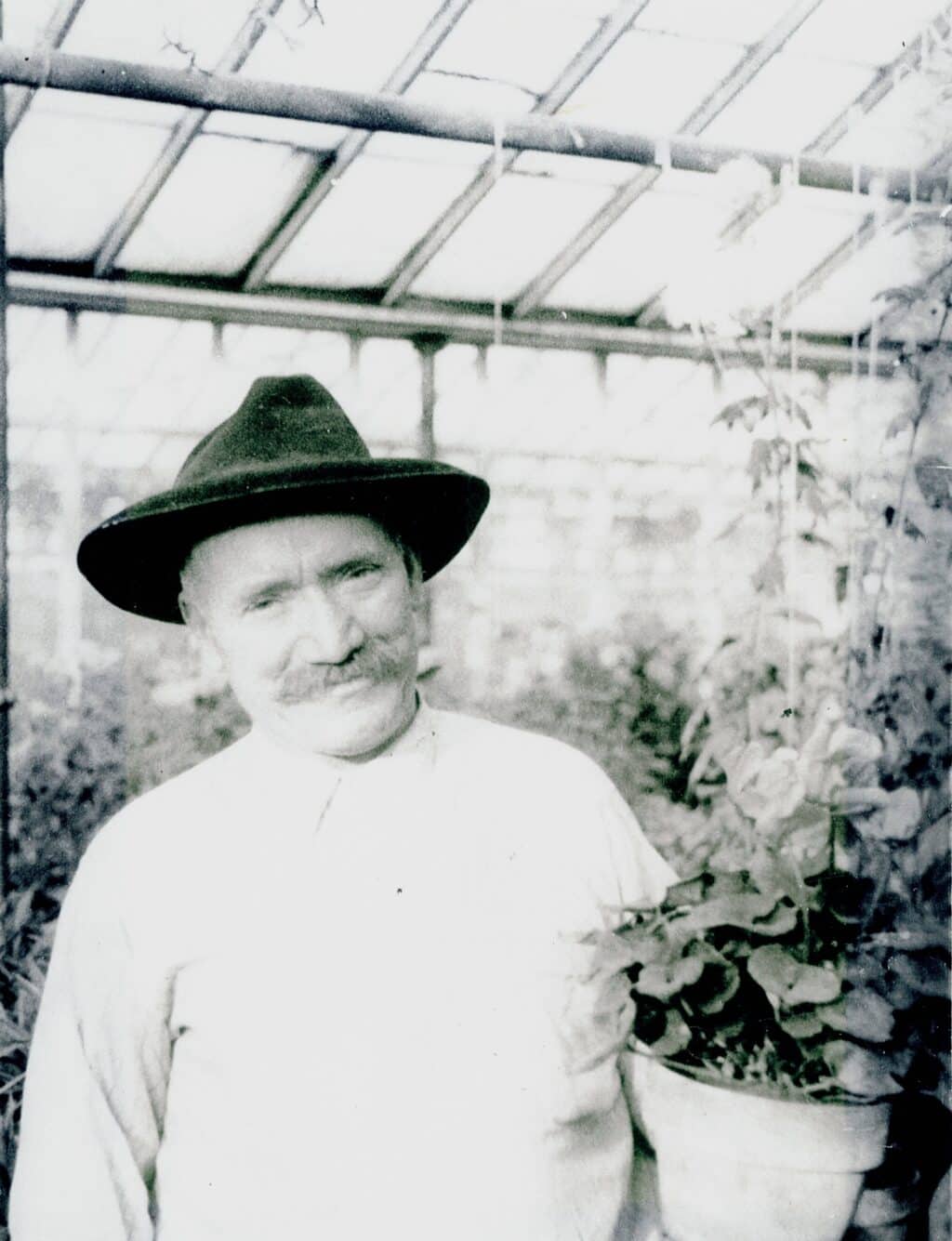
Domenico Alice opened Liberty Park Florist and Greenhouse in 1928. He was born in Serravalle Scrivia, Italy, and immigrated to the US in 1911. (Photo ca. 1930.)
Source: Courtesy of Liberty Park Florist and Greenhouse
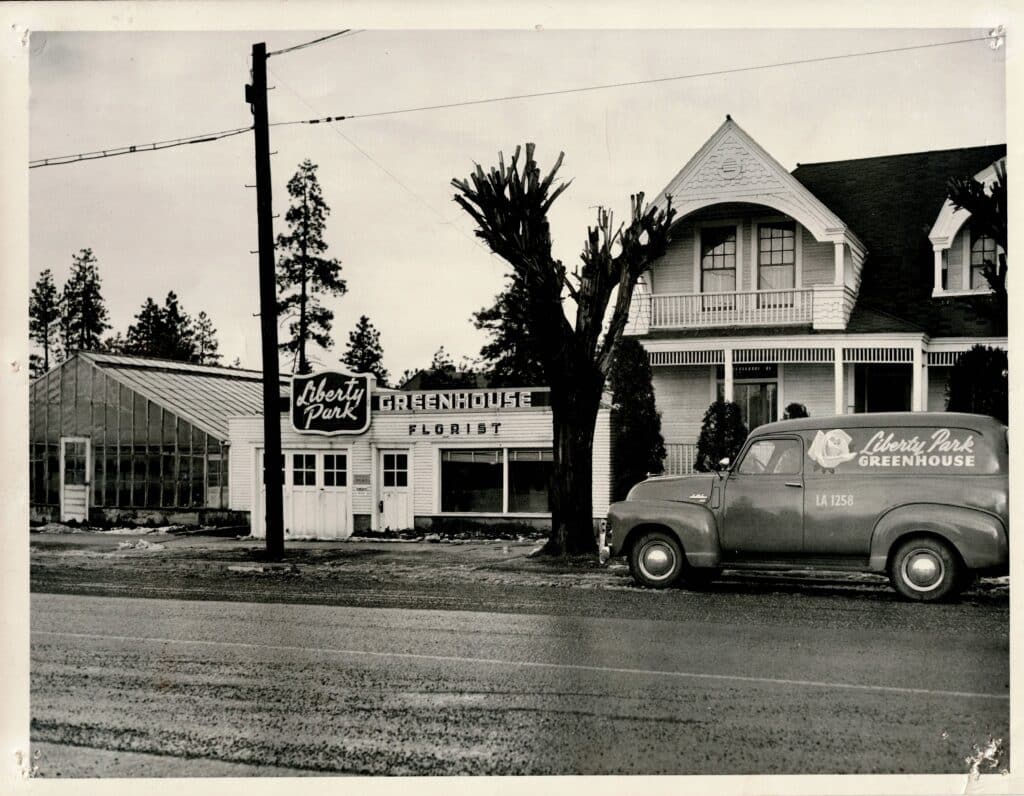
Domenico and Julia Alice operated Liberty Park Florist and Greenhouse from their Newark Avenue home, which was demolished in 1966 and replaced by the current structure. (Photo ca. 1950.)
Source: Courtesy of Liberty Park Florist and Greenhouse
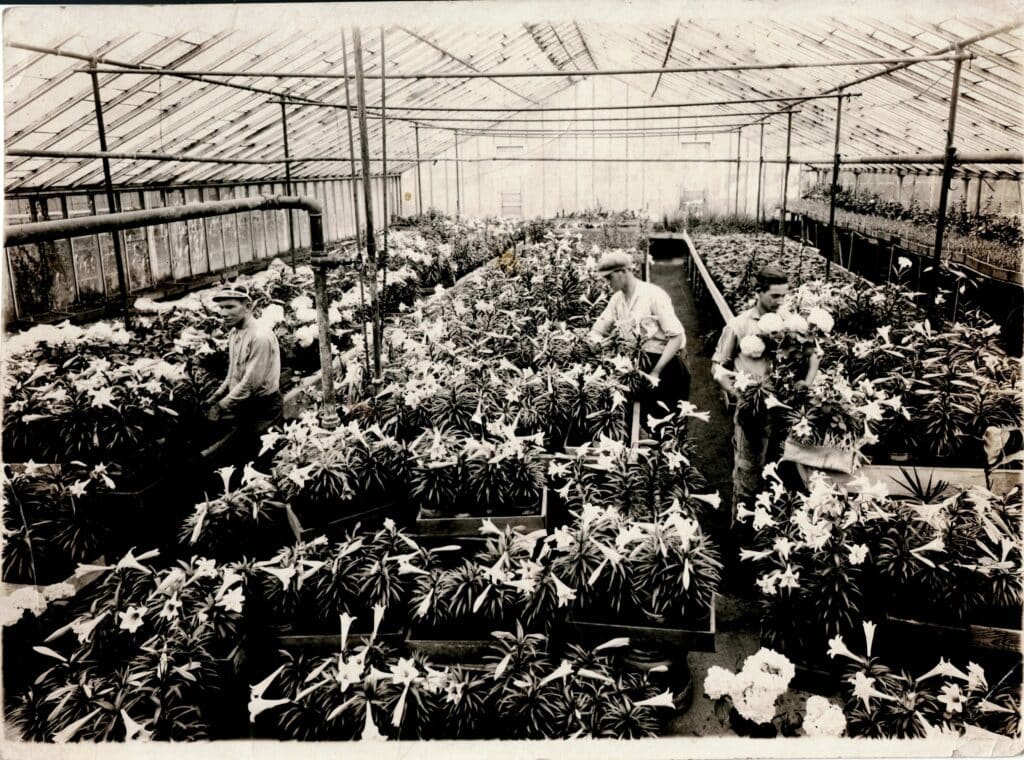
Liberty Park Florist and Greenhouse has grown plants on this site since 1928. This photograph shows the greenhouse preparing for the Easter season. (Photo ca. 1930.)
Source: Courtesy of Liberty Park Florist and Greenhouse
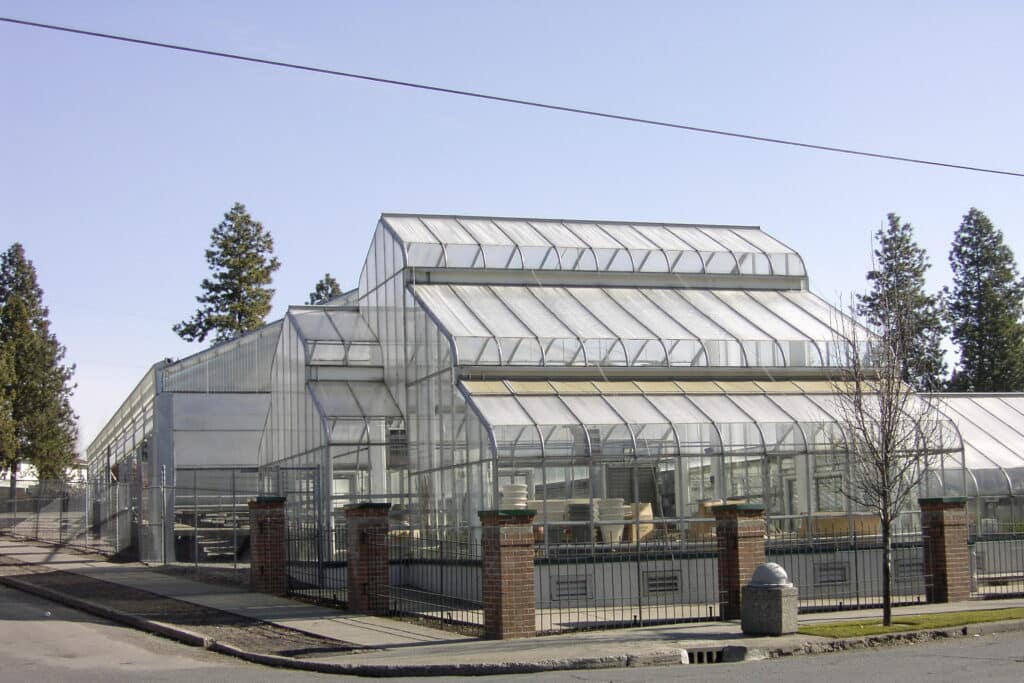
Liberty Park Florist and Greenhouse expanded over the decades alongside the growth and change of the surrounding neighborhood. (Photo ca. 2006.)
Source: Washington Department of Archaeology and Historic Preservation
-
Stop 4: Spokane Buddhist Temple
Spokane Buddhist Temple
Did You Know?
- The Spokane Buddhist Temple celebrates Japanese culture through seasonal events, including Ramen Fest in the spring and fall, Mochi Fest in the winter, and the annual Obon Festival in the summer.
- The original Spokane Buddhist Temple was destroyed in a devastating fire in 1992, but firefighters were able to save the temple’s Amida Buddha shrine, first installed in 1948. The shrine remains in use in the temple today.
- From 1965 into the early 2000s, the recreation hall served as a karate dojo under the direction of internationally renowned Sensei Teru Chinen.
The Temple’s Story
Between 1900 and 1920, the Liberty Park neighborhood grew rapidly, adding new businesses, homes, and churches. In 1910, Liberty Park Baptist Church and an adjacent recreation hall were constructed to serve the needs of the growing community. As the congregation expanded, a larger worship space was needed. In the 1960s, Liberty Park Baptist Church merged with another congregation and relocated to a church on 29th Avenue and Southeast Boulevard.
In 1945, a small group of six Shin Buddhists began meeting in a rented apartment near Cowley Street and Hartson Avenue under the leadership of Eiyu Terao, who moved to Spokane after his release from Minidoka Relocation Center in Idaho, where he and his family were interned for three years during World War II. At the time, it was Spokane’s only Buddhist congregation. Under the leadership of Eiyu and later his brother, William Terao, the congregation grew to more than 300 members by 1950, leading to the purchase of the former Liberty Park Baptist Church and recreation hall in 1965.
In 1992, a fire destroyed the original turn-of-the-century church. A new Spokane Buddhist Temple, designed by architect Doug Heyamoto, was constructed on the site and dedicated in 1994.
From 1965 to 2000, the adjacent recreation hall served the community as a karate dojo, yoga studio, and gathering place for a variety of activities. In 2014, the Spokane Buddhist Temple dedicated the building as Terao Hall in honor of the Terao brothers who founded the temple.
Learn More
Then and Now: Spokane Buddhist Temple
Spokesmen Review, July 9, 2018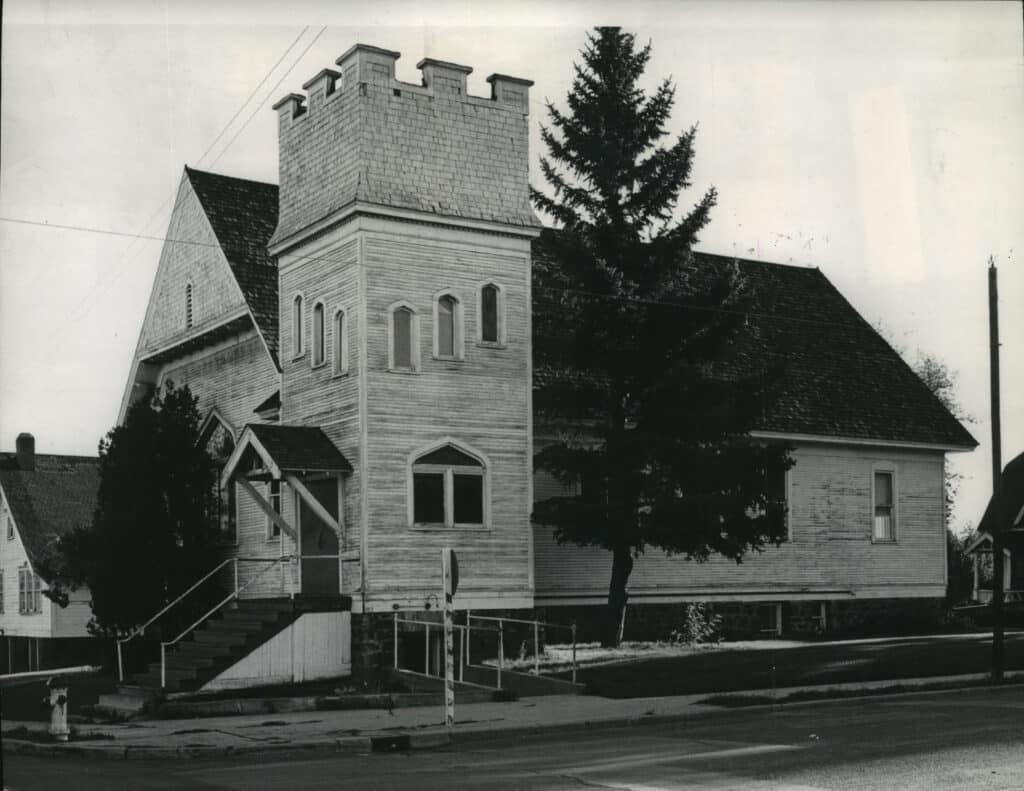
The former Liberty Park Baptist Church was acquired for use by the Spokane Buddhist Temple in1965. (Photo ca. 1965.)
Source: Photo archived Spokesmen Review, July 9, 2018
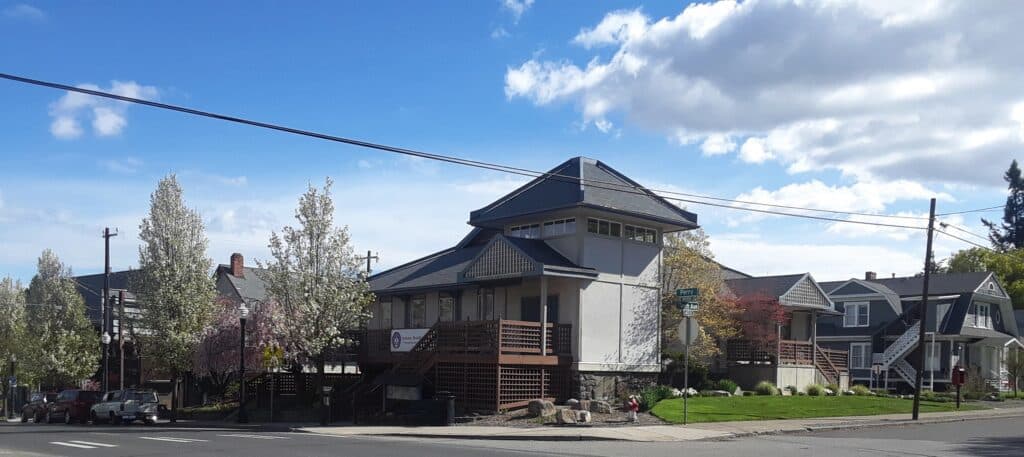
After a fire in 1992, the Spokane Buddhist Temple was rebuilt. The new temple, designed by architect Doug Heyamoto, was dedicated in 1994. (Photo ca. 1994.)
Source: Photo courtesy of Spokane Buddhist Temple
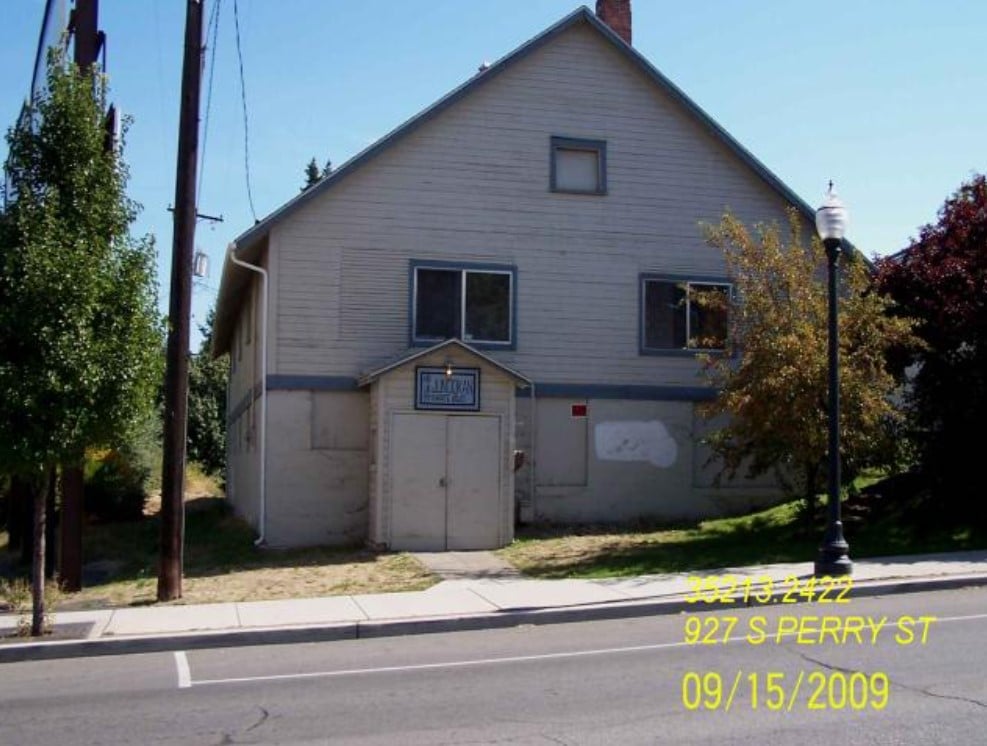
Constructed in 1921, Terao Hall originally served as a gymnasium for Liberty Park/Heights Baptist Church. In 2014, it was renamed in honor of the founders of the Spokane Buddhist Temple. (Photo ca. 2009.)
Source: Photo courtesy of Spokane Buddhist Temple
-
Stop 5: South Perry Commercial District
South Perry Commercial District
Did You Know?
- The Hoxsey Block was home to two important community institutions: the only neighborhood branch of the Spokane Public Library for over 60 years and Altamont Pharmacy, which operated for nearly a century.
- In 1911, Hoxsey and Spangle Drugs was renamed Altamont Pharmacy and operated from the Hoxsey Block. In 1955, the Altamont Pharmacy moved north across Tenth Avenue to the McEachran Block, 928 S Perry Street.
- The South Perry District underwent significant revitalization in the early 2000s, transforming from a neglected area into a bustling neighborhood hub. In the early 2000s, the City of Spokane recognized the South Perry District as a neighborhood business center, prioritizing it for funding, grants, and, crucially, a streetscape improvement plan. This included street trees, lighting, and new sidewalks between Eighth and 12th Avenue.
- The Thursday Market, a bustling farmer’s market, started in 2006, helping to increase foot traffic, encourage community, and further revitalize the South Perry District.
The Commercial District’s Story
In the early 1900s, the term “block” was used to designate commercial buildings that housed one or more businesses, instead of an area of city land bounded by intersecting streets as we now use the word.These ‘block’ buildings were typically named after their owner or developer. South Perry’s historic business district grew around four of them: McEachran, Hoxsey, Landen, and Walser Blocks. The Hoxsey and McEachran Block, both completed in 1910, anchored the neighborhood’s emerging commercial center. They were followed by the Landen Block in 1913 and Walser Block in 1920.
South Perry Street operated as its own village, lined with grocery stores, meat markets, restaurants, barber shops, gas stations, a pharmacy, a public library, and other locally owned businesses that served the surrounding neighborhood. Longtime resident Beverly Vorpahl recalled, “Customers and merchants knew one another by name up and down Perry.” Beverly grew up in the area, attended Grant School, married at Liberty Park Baptist Church (now the Spokane Buddhist Temple), and celebrated her 50th wedding anniversary at The Shop in 2007.
Following decades of decline after the construction of Interstate 90, South Perry experienced a revival beginning in 1999 with the opening of The Shop, a neighborhood coffeehouse that quickly became a community gathering place. In the early 2000s, the City of Spokane designated South Perry as a neighborhood business center and funded new sidewalks, street trees, lighting, and other improvements between Eighth and 12th Avenues that helped transform the district. Today, many of its historic buildings have been thoughtfully restored and adapted, preserving the neighborhood’s unique character while continuing its tradition as a vibrant community gathering place.
Learn More
Perry Street Memories
Spokesmen Review, December 4, 2003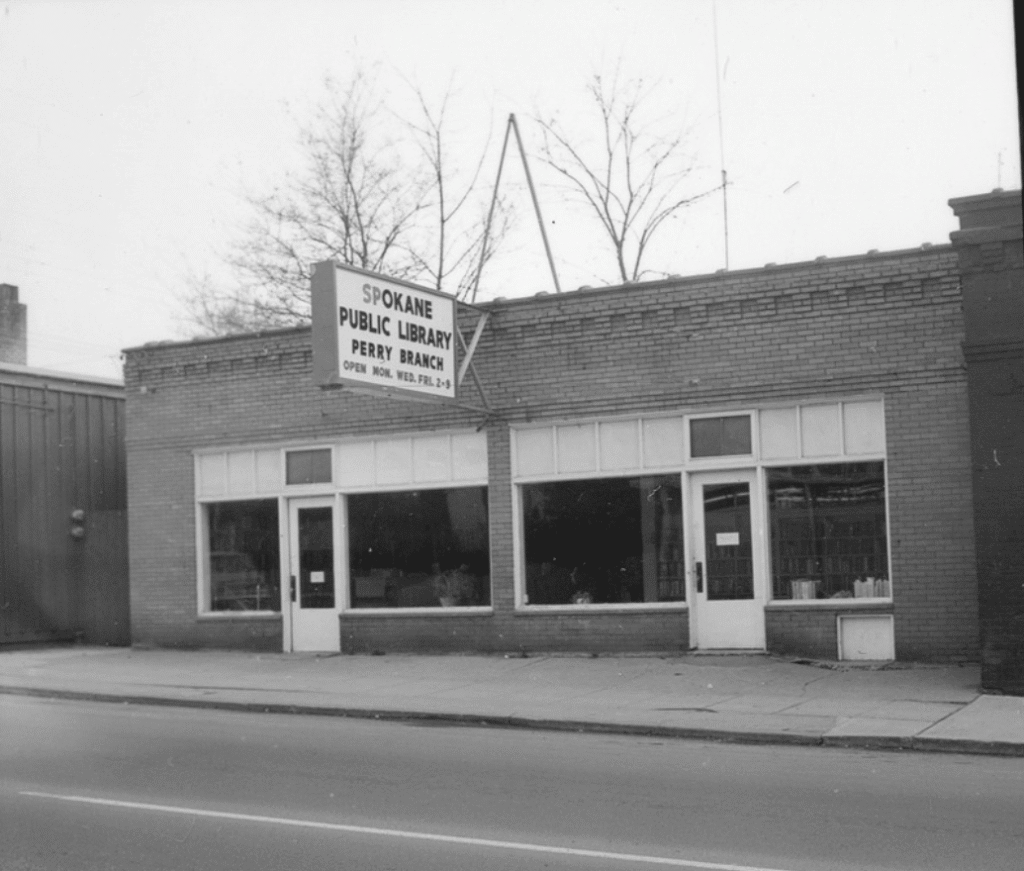
The Perry Street Branch of the Spokane Public Library, shown here at 1012 South Perry Street, served the neighborhood for over 60 years. (Photo ca. 1976.)
Source: Photo courtesy of Spokane Public Library
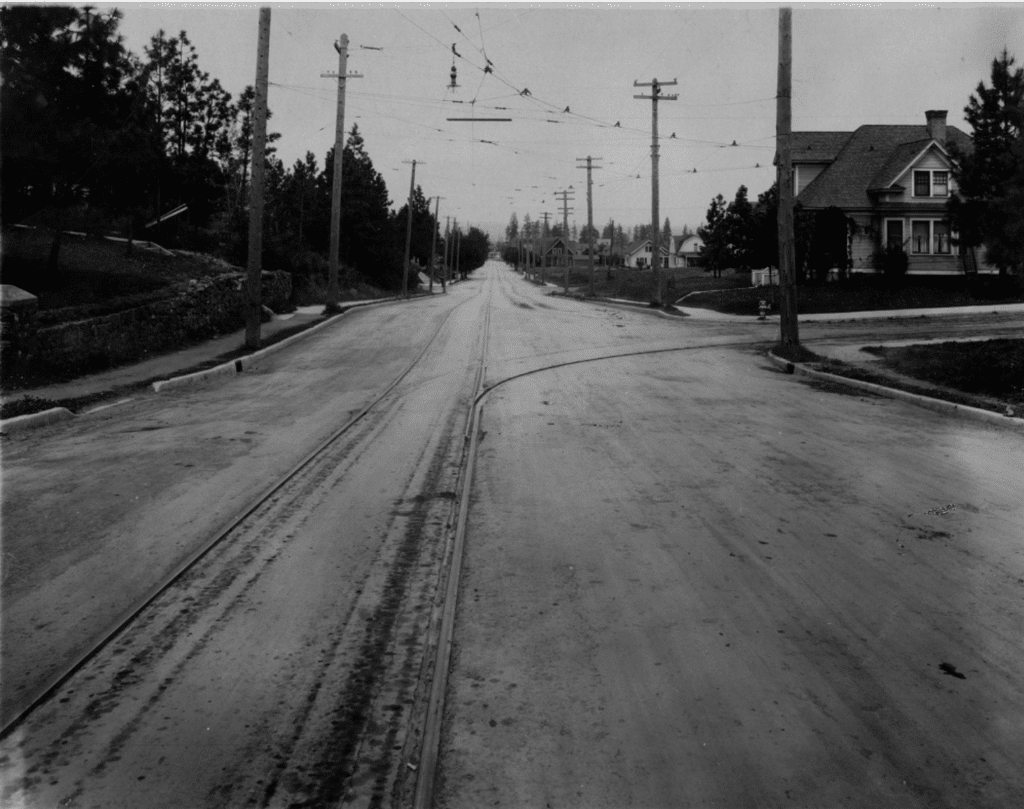
Perry Street south of 14th Avenue looking north, probably in the 1920s. The streetcar lines suggest the neighborhood’s beginnings as a streetcar suburb.
Source: Photo courtesy of Northwest Museum of Arts and Culture, L87-361.111
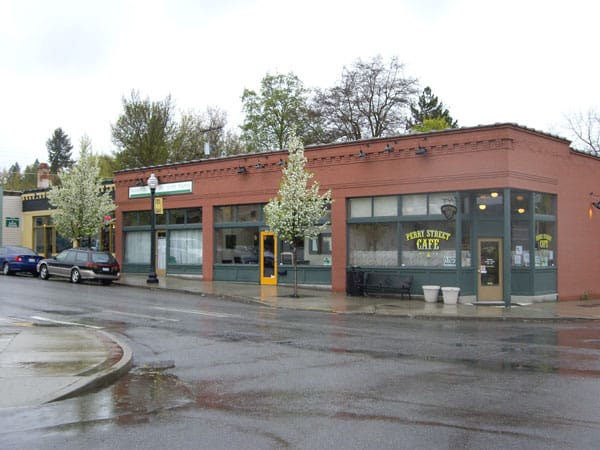
The Hoxsey Block was built in 1910 for Spokane physician Thomas Hoxsey. This commercial hub contributed to the health, welfare and social needs of the South Perry community. (Photo ca. 2005.)
Source: Photo courtesy of Spokane City/County Historic Preservation Office
-
Stop 6: Original Grant School
Original Grant School
Did You Know?
- Grant School was named for Ulysses S. Grant, the Civil War general who became the 18th President of the United States.
- The original Grant School was designed as an all-in-one neighborhood school serving grades 1 through 8. At that time, the concept of a modern “middle school” or “junior high” did not exist in Spokane. Students typically attended their local neighborhood school through the eighth grade before moving to regional high schools.
- Grant School’s first graduating class in 1908 consisted of just 14 students.
- More than 70 languages are spoken in the Spokane School District, with 20 spoken at Grant School alone.
- In 1974, Margot Dries started Grant Elementary School Drummers and Dancers. She wanted children attending Grant School to gain cultural experience, have a sense of belonging, and set lofty goals for themselves.
Grant School’s Story
For more than a century, Grant School has been a cornerstone of the South Perry neighborhood and is known for its diversity, inclusivity, and strong community connections. In the late 1800s and early 1900s, the expansion of the railroad and Spokane’s growing mining, timber, and agricultural industries brought immigrants from Italy, Germany, Sweden, Japan, and other countries to the city. As the Liberty Park neighborhood emerged as one of Spokane’s early suburbs, its growing population and diverse mix of residents created a need for a neighborhood school.
To serve this growing community, the two-story brick Grant School was constructed in 1900. As the city’s population continued to grow and change, so did the school. Additions to the original building were completed in 1906, 1910, and 1951 to accommodate increasing enrollment. The Ulysses S. Grant Playground was also added on the corner of Ninth Avenue and South Perry Street, featuring a playfield, tennis courts, and playground equipment for students and neighborhood families to enjoy.
During the 1960s, construction of Interstate 90 dramatically reshaped the neighborhood. More than 40 homes surrounding the school were acquired and removed, creating the expanded green space that is now Grant Park. In 1980, the original school was demolished, and a new school was constructed on the former U.S. Grant Playground site.
According to William Reuter who was principal in the 1990s, Grant School became known as the “Mini United Nations” because of its remarkable linguistic and cultural diversity. More than 20 languages are spoken by students and their families. Grant School’s teachers and staff have long been recognized for their dedication to the success of every student. In 2024, the Grant Drummers and Dancers celebrated 50 years of sharing music, dance, and cultural traditions with the community.
Learn More
Grant Elementary
Spokane School District #81 and Hugh Davis. First Class for 100 Years: Spokane Public Schools, School District No. 81, 1889-1989. Spokane Public Schools, 1989.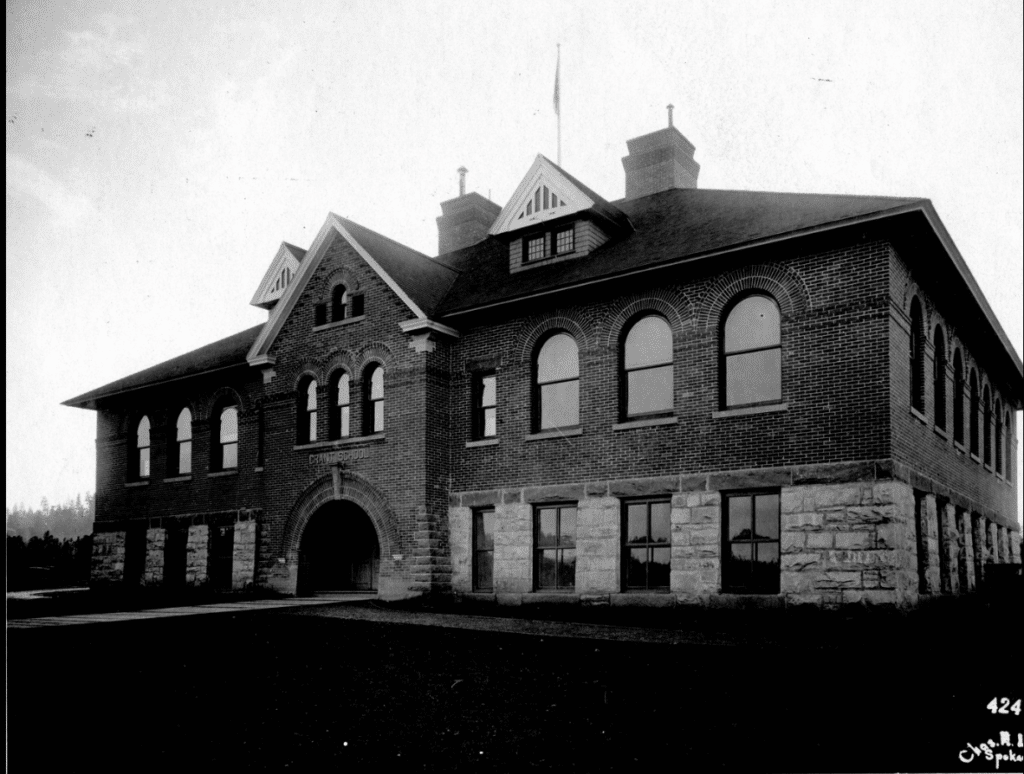
Grant School opened in 1900 to serve the growing Liberty Park neighborhood. (Photo ca. 1900.)
Source: Courtesy of Museum of Northwest Arts and Culture, L87-1: Libby Studios Photographs Series
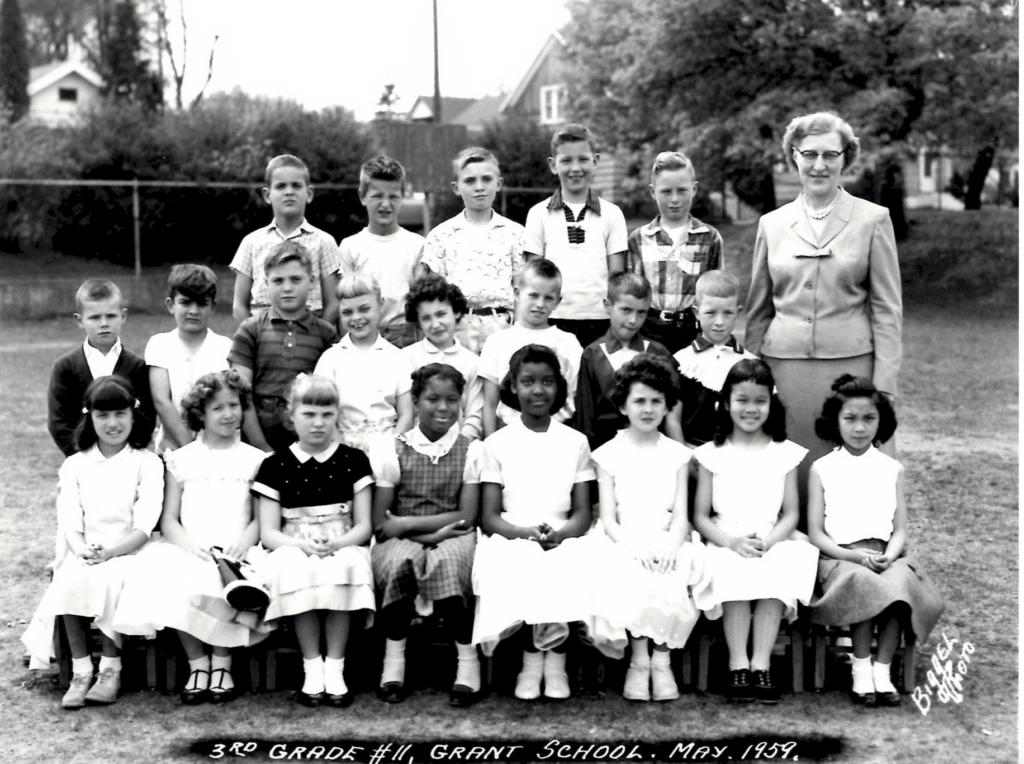
Serving a diverse student body has long been a defining feature of Grant School’s history and culture. Third-grade class, 1958–1959.
Source: Courtesy of Lewis and Clark High School Class of 1968, https://www.lctigers1968.com/grant/
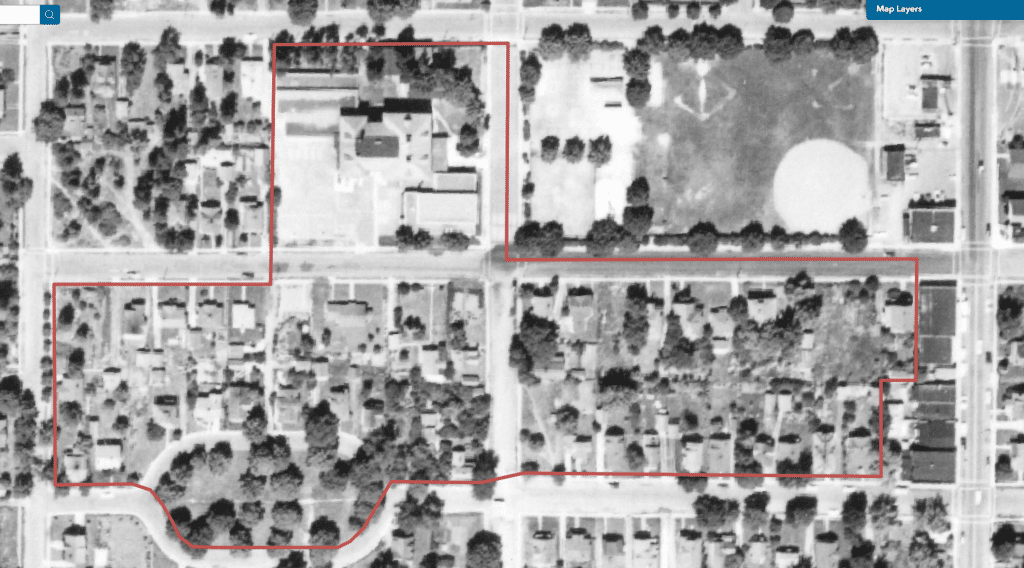
This 1958 aerial view of Stadacona Circle, Grant School and surrounding homes shows 10th Avenue (E – W) between Perry and Arthur Streets and Ivory Street (N – S) between 11th and Ninth Avenues. (Photo ca. 1958.)
Source: Courtesy of Spokane Parks Department.
-
Stop 7: Stadacona Circle
Stadacona Circle
Did You Know?
- Like Manito Park and the city of Spokane, Stadacona Park bears a name with Indigenous origins. It was named after Stadacona, a 16th-century St. Lawrence Iroquoian village near present-day Quebec City.
- Grant Park was once occupied by homes, and Tenth Avenue passed through the area before it was transformed into public green space.
- The Olmsted Brothers helped pioneer the modern urban park system and advanced the ideals of the City Beautiful movement, believing that every neighborhood should have access to parks and green spaces within walking distance. Their emphasis on preserving natural landscapes continues to influence urban planning in cities such as Seattle and Spokane.
- The City Beautiful movement developed nationally in response to rapid 19th-century industrialization. The movement focused on making cities healthier, more livable and more beautiful through intentional planning and landscape design.
Stadacona Circle’s Story
Stadacona Circle was envisioned as “a small breathing space for the neighborhood” by the renowned landscape architects and park planners, the Olmsted Brothers, in their 1908 report to the Spokane Park Commission. The 1.3-acre park became one of Spokane’s earliest neighborhood parks, distinguished by its circular design that disrupted the traditional street grid. The land was donated by Citizens National Bank and local real estate developers Fred and Ella Grinnell.
Over half a century later, between 1965 and 1971, construction of Interstate 90 claimed much of nearby Liberty Park and dramatically altered the surrounding neighborhood. In response, the Spokane Park Board and City Council approved the creation of the present-day Grant Park by combining Stadacona Circle with the adjacent U.S. Grant Playground, now the site of Grant Elementary School. Funds from the sale of Liberty Park land to the Washington State Department of Transportation were used to acquire and remove surrounding homes, allowing the new, expanded park to take shape.
The many parks throughout Spokane are a result of the vision of the Spokane Park Board of Commissioners who sought to transform the entire city into a “City of Parks.”
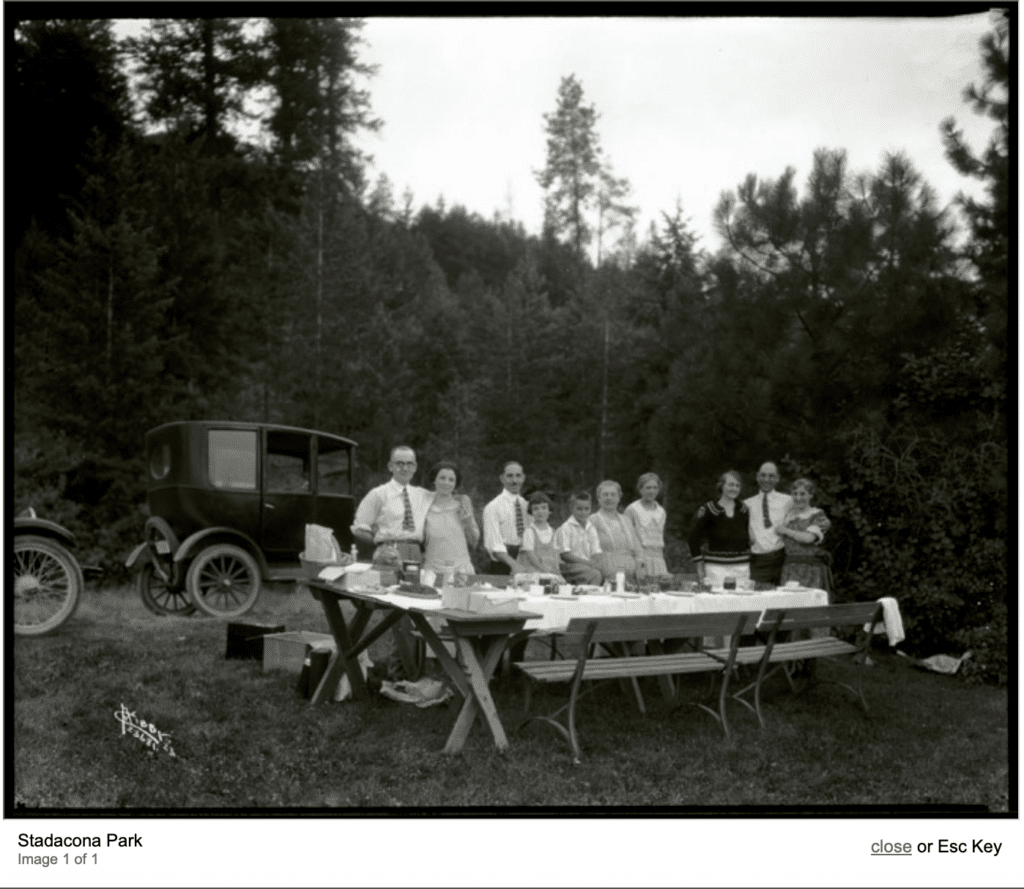
Families enjoyed picnicking in Stadacona Circle. (Photo ca. 1916.)
Source: Photo courtesy of the Spokane Preservation Society
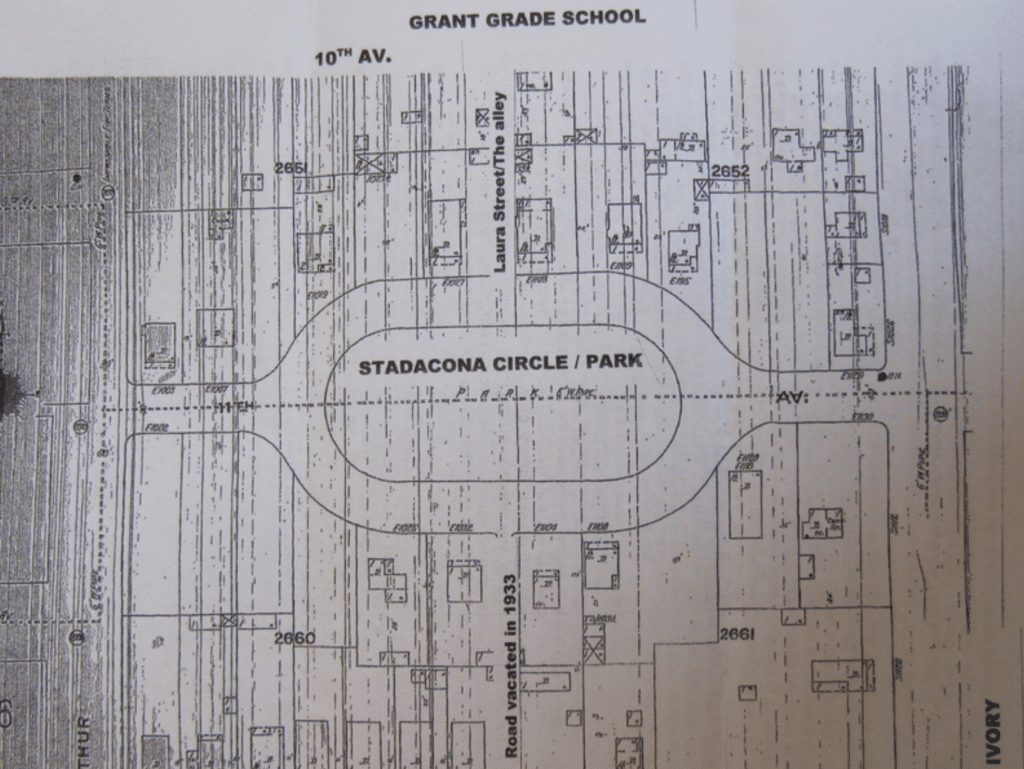
One of the first parks in Spokane, Stadacona Circle was once located on 11th Avenue between Ivory and Arthur Streets. (Photo ca. 1933.)
Source: Map courtesy of Spokane Parks and Recreation Department
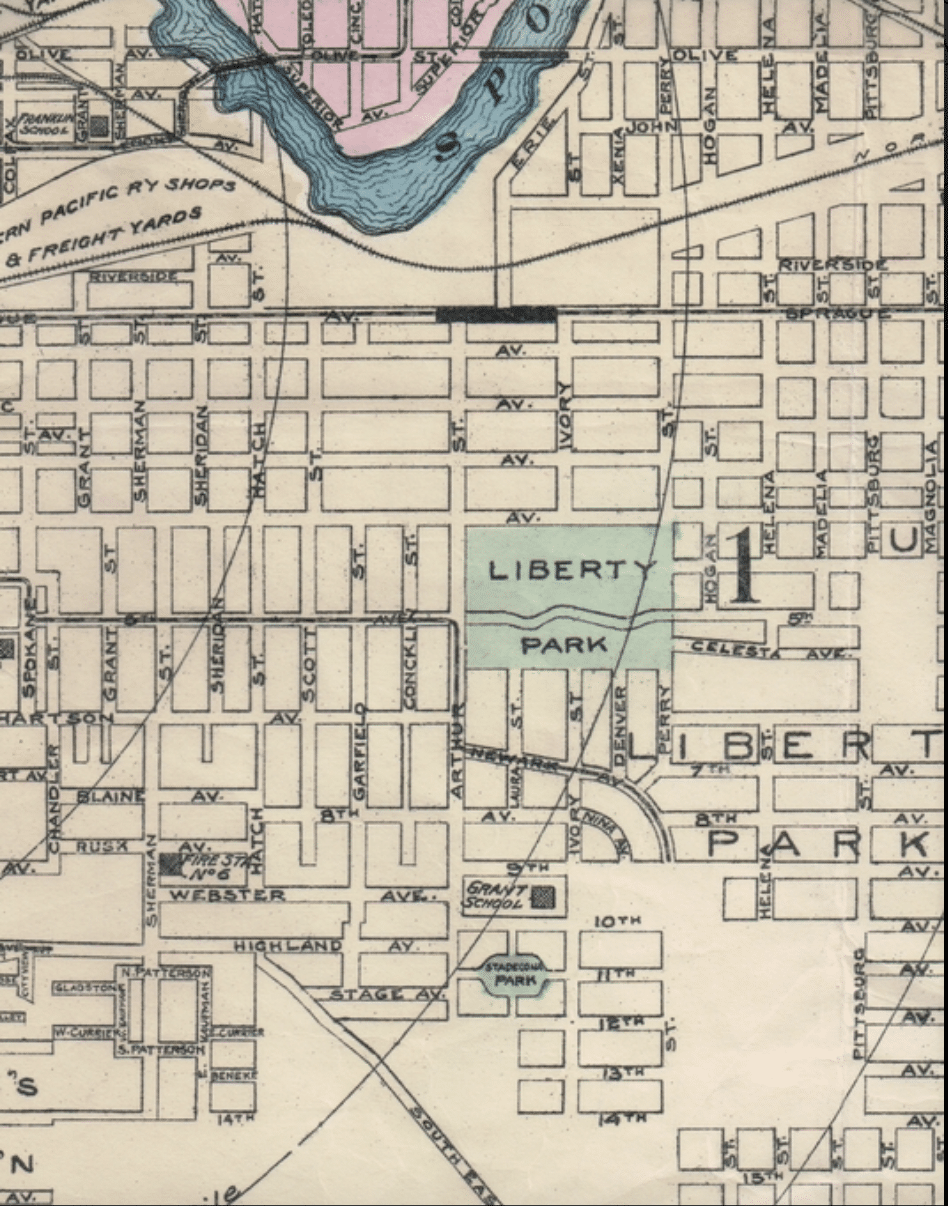
The land for Stadacona Circle was donated to the City of Spokane by the Citizens National Bank and Fred and Ella Grinnell in 1905. (Map ca. 1909.)
Source: Map courtesy of Inland Northwest Special Collections, Map of Spokane
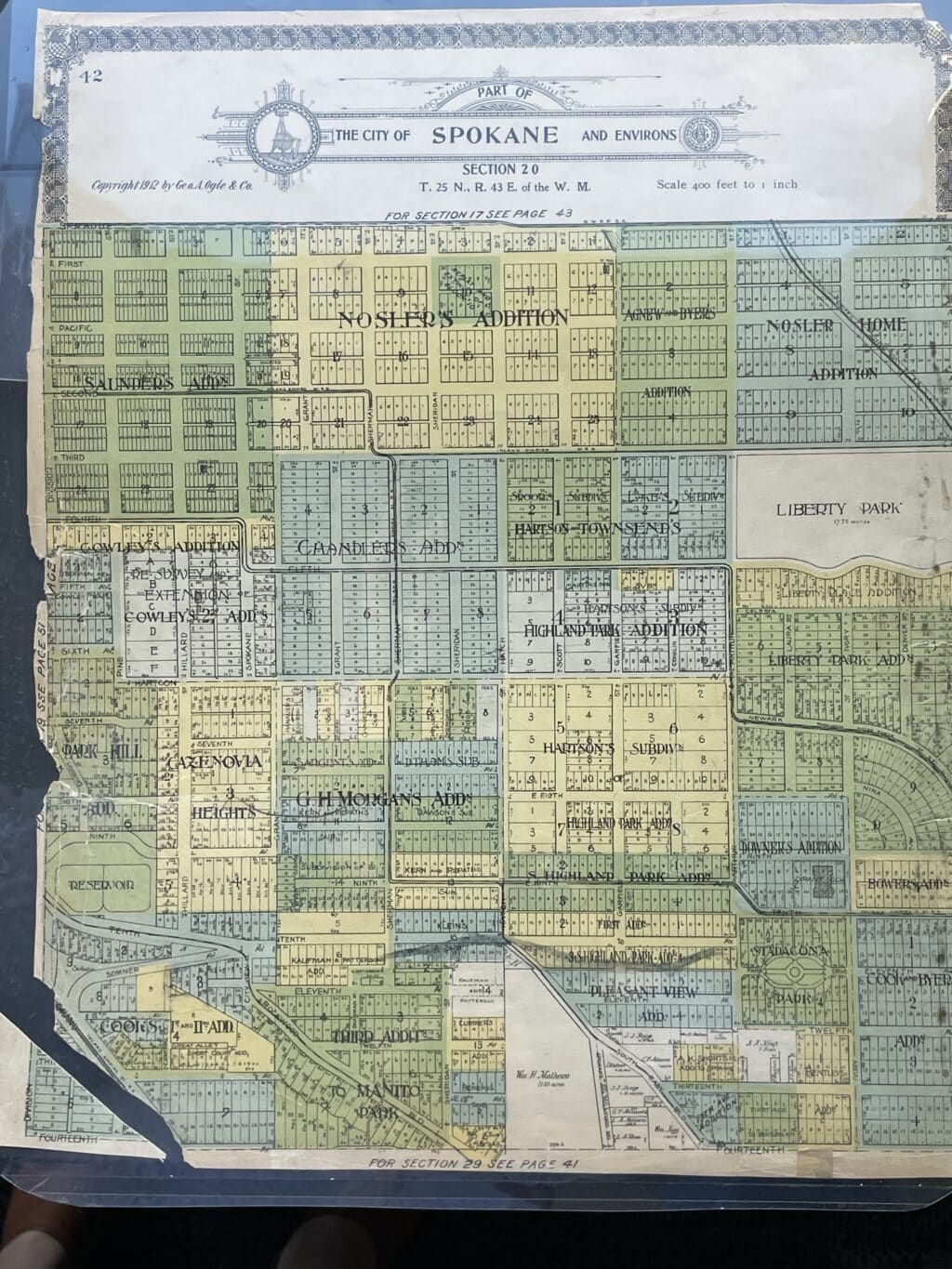
In 1912, Spokane was composed of a variety of additions, most named after investors in various properties. This map shows Liberty Park Addition, Highland Park Addition, Stadacona Park and more. (Map ca. 1912.)
Source: Map courtesy of Inland Northwest Special Collections, Map of Spokane
-
Stop 8: Cambern Dutch Windmill
Cambern Dutch Windmill
Did You Know?
- The Cambern brothers were raised on a wheat and dairy farm in Colbert, Washington.
- Although not of Dutch heritage, the brothers marketed their products under the name “Dutch Main” and promoted their business through the whimsical windmill design of their buildings.
- The Cambern windmill stores are examples of novelty commercial architecture, a popular style of the 1920s and 1930s in which buildings themselves served as advertisements. Their distinctive designs were meant to attract the attention of passing motorists in the emerging automobile age.
- The South Perry windmill is one of nine original locations built by the Cambern Corporation, with another surviving example located in Browne’s Addition.
The Windmill’s Story
Known for award winning ice cream, the Cambern Dutch Bakery and Creamery location in South Perry opened in 1930, selected for its proximity to a thriving commercial district. The shop served shakes and cones to residents of the Liberty Park neighborhood. It was one of nine Dutch windmill-style stores established by brothers Robert and Cecil Cambern in prominent Spokane locations by the end of the 1920s.
Operating as the Cambern Corporation, the business included a wholesale dairy, bakery, and ice cream plant and produced its own butter, bottled its own milk, and baked more than 150 varieties of pastries. Despite its early success, the company struggled during the Great Depression and later went bankrupt. The South Perry windmill was purchased by the Benewah Creamery, which operated out of the building from 1938 to 1950. Benewah Creamery also owned the milk bottle buildings—another notable example of novelty commercial architecture.
By 1943, most of Spokane’s windmill-style Cambern buildings had been demolished. After 1950, the South Perry structure housed a variety of businesses, including the Windmill used clothing store—later known as The Windfall. After a period of vacancy, Trend House Interior Design added a one-story, gable-roof addition to the west side of the building in the 1990s. In 2003, Lorien Herbs, a family-owned business, made the historic windmill its home.
The structure was listed on the National Register of Historic Places in 1989, where it was recognized as “one of the finest examples of novelty architecture in Spokane.”
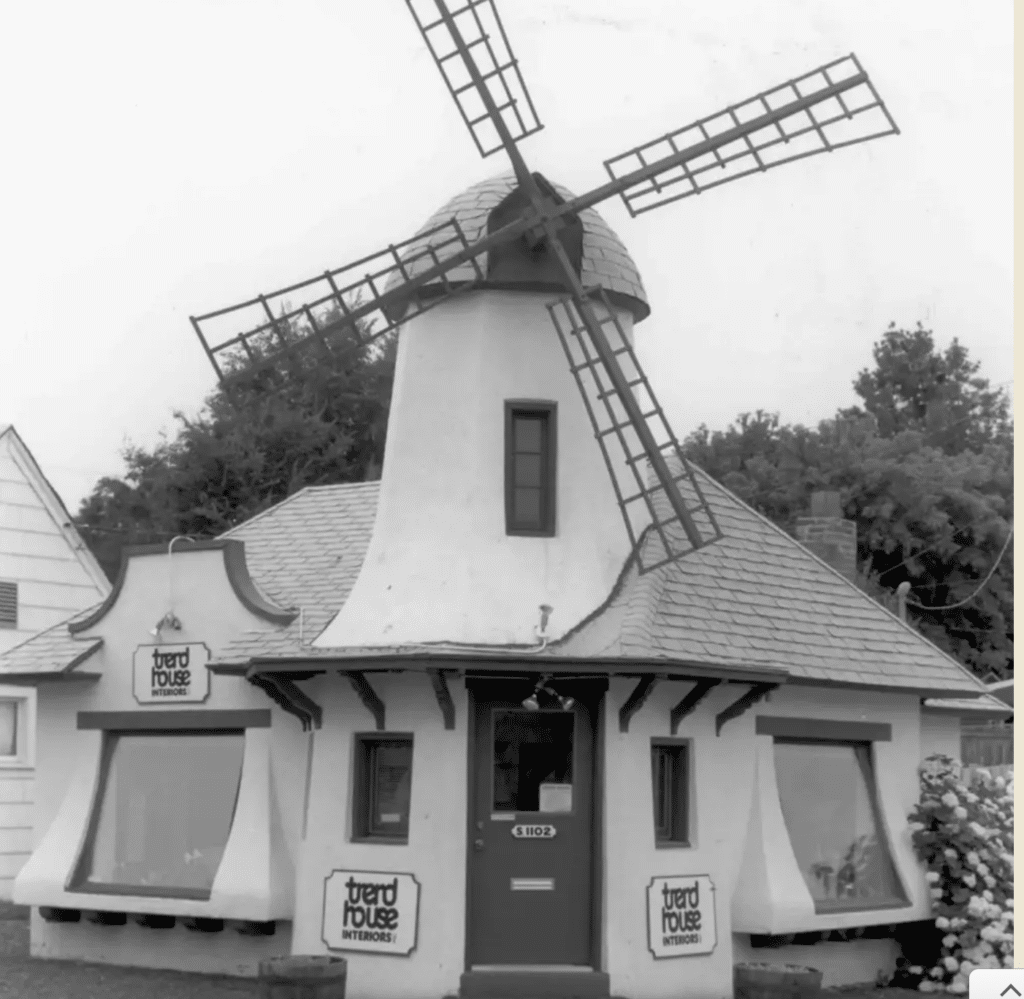
Built in 1929, the Cambern Dutch Shop Windmill is a small commercial building modeled after a traditional Dutch windmill.
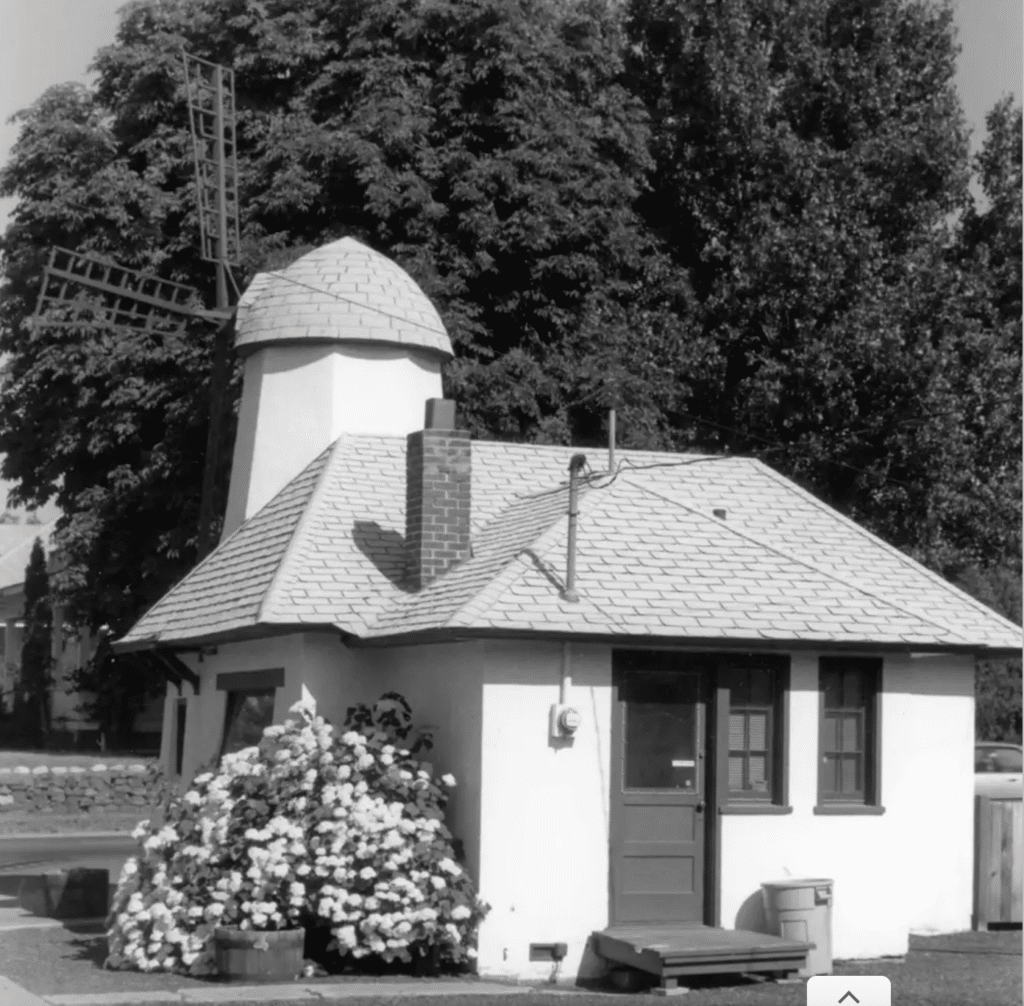
Spokane once featured nine windmill-shaped commercial buildings.
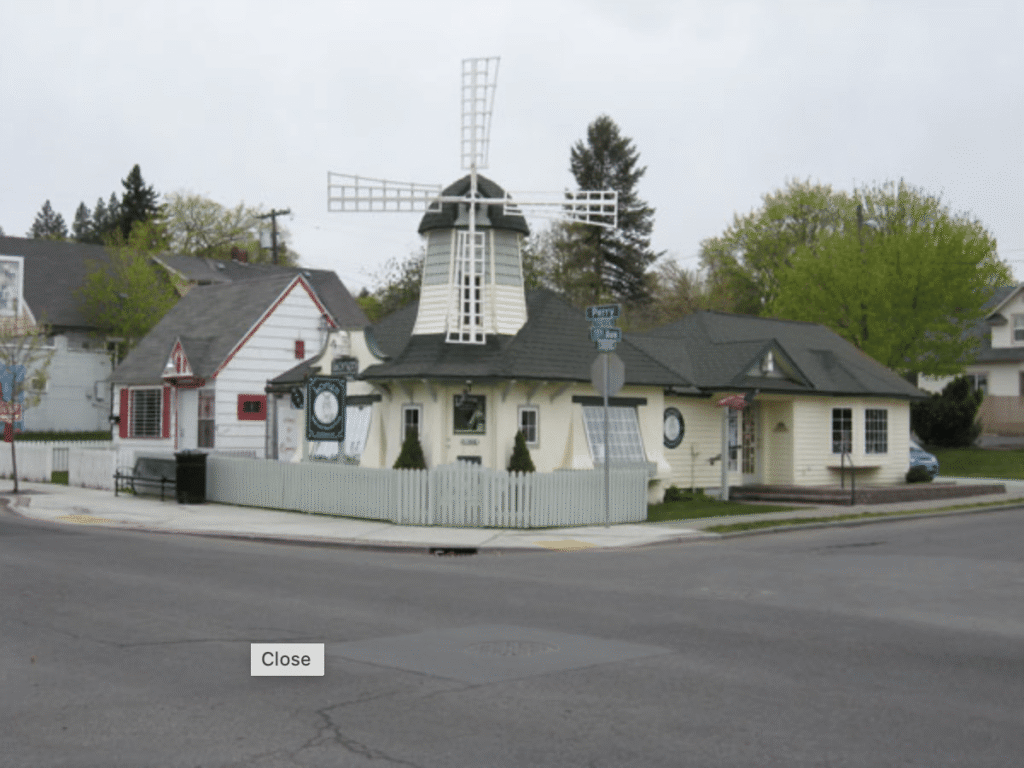
Cambern Dutch Windmill, contemporary view. (Photo ca. 2005.)
Source: Photo courtesy of Spokane City/County Historic Preservation Office.
-
Stop 9: Liberty Park United Methodist Church
Liberty Park United Methodist Church
Did You Know?
- In 1905, before the Liberty Park United Methodist congregation had a building, they worshipped in a grove of trees near 14th Avenue and Pittsburgh Street.
- The sanctuary was designed using the Akron Plan (popularized by a Methodist minister and an architect in Akron, Ohio). In this layout, the pews are arranged in a sloping, semi-circular pattern that radiates outward from a corner pulpit, rather than the traditional straight rows facing a front stage. Liberty Park is one of only two Spokane churches to utilize this rare layout (the other being First Presbyterian downtown).
- In 1995, the sanctuary of Liberty Park United Methodist Church was the primary filming location for the short-lived television drama Amazing Grace, which starred Oscar-winning actress Patty Duke (who lived in Coeur d’Alene, Idaho for many years) as a former emergency room nurse turned minister.
- For more than a century, Liberty Park United Methodist Church has served the South Perry neighborhood. Today, its ministry extends beyond worship through partnerships with organizations such as Family Promise, Crosswalk, and Spokane Alliance. The church is also home to a Montessori preschool, which has educated hundreds of children since opening in 2003.
The Church’s Story
Liberty Park United Methodist Church, incorporated in 1906, is a strong example of a church built during Spokane’s early period of rapid suburban growth. Tradition holds that the church was designed and constructed by members of its own congregation, including draftsman Leonard Starr and contractor Harry Belanger. The $725 cost of the land was provided through the personal savings of Reverend William S. Turner.
During the decade of the church’s founding, Spokane’s population more than tripled. After the first structure was built on the site in 1909, the congregation quickly outgrew it. The new church was dedicated on December 18, 1912, becoming an important anchor in the rapidly growing Liberty Park neighborhood.
Today, the church remains largely intact with minimal alterations. It retains its original stained-glass windows, a radial interior design consistent with the then-popular Akron Plan, and distinctive Gothic Revival architectural features. Because of its distinct architectural characteristics, it was placed on the Spokane Register of Historic Places in 2002.
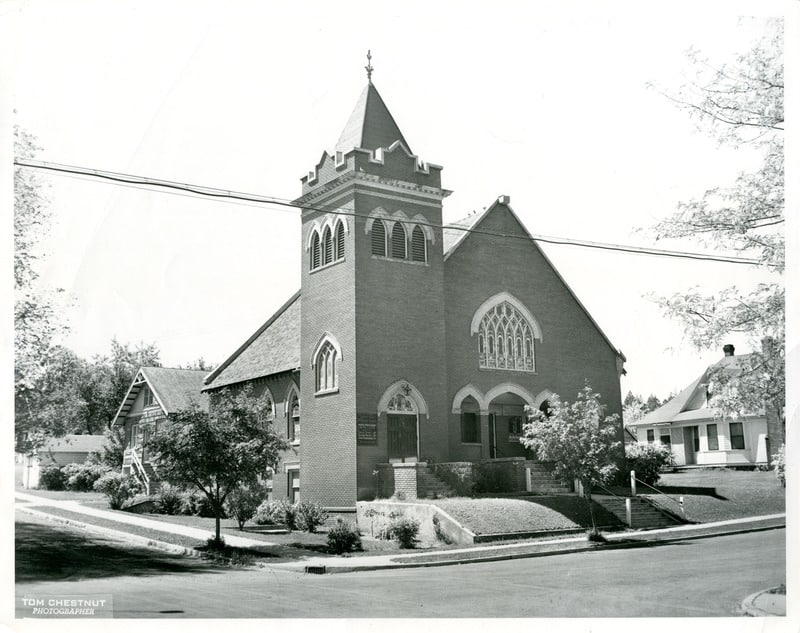
Liberty Park United Methodist Church was placed on the Spokane Register for Historic Places in 2002. (Photo ca. 1947.)
Source: Courtesy of Inland Northwest Special Collections, Spokane Public Library
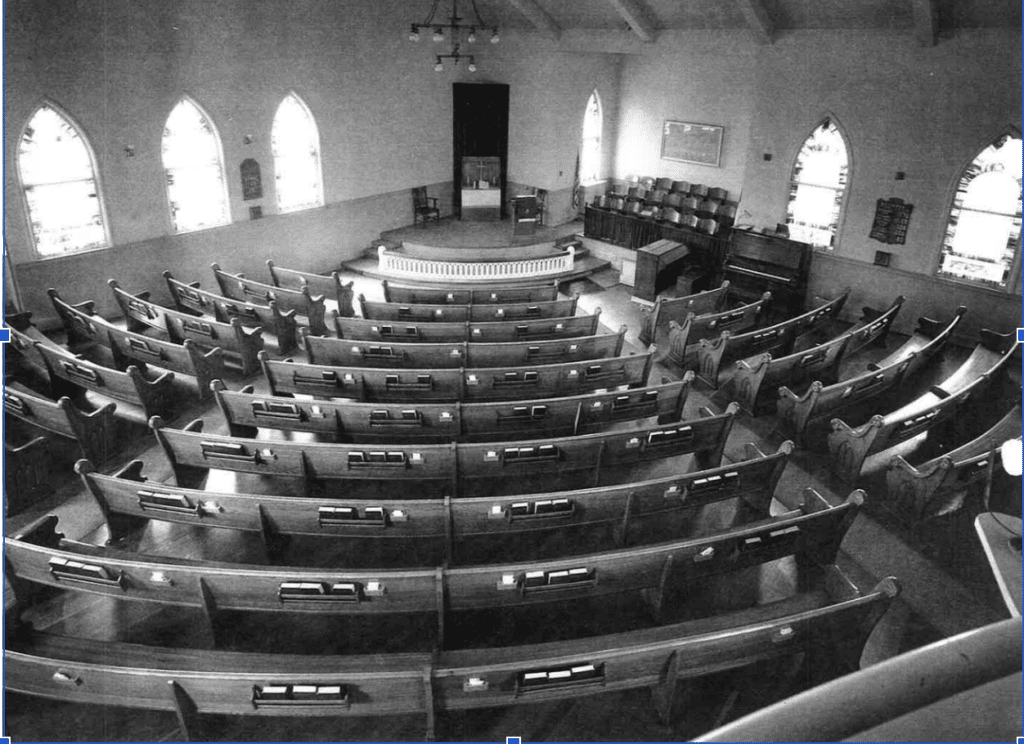
The sanctuary remains minimally remodeled from its 1912 original design. (Photo ca. 1966.)
Source: The Church is The People, Volume 1: A History of Liberty Park Methodist Church 1905-1959 by Fred Tobie
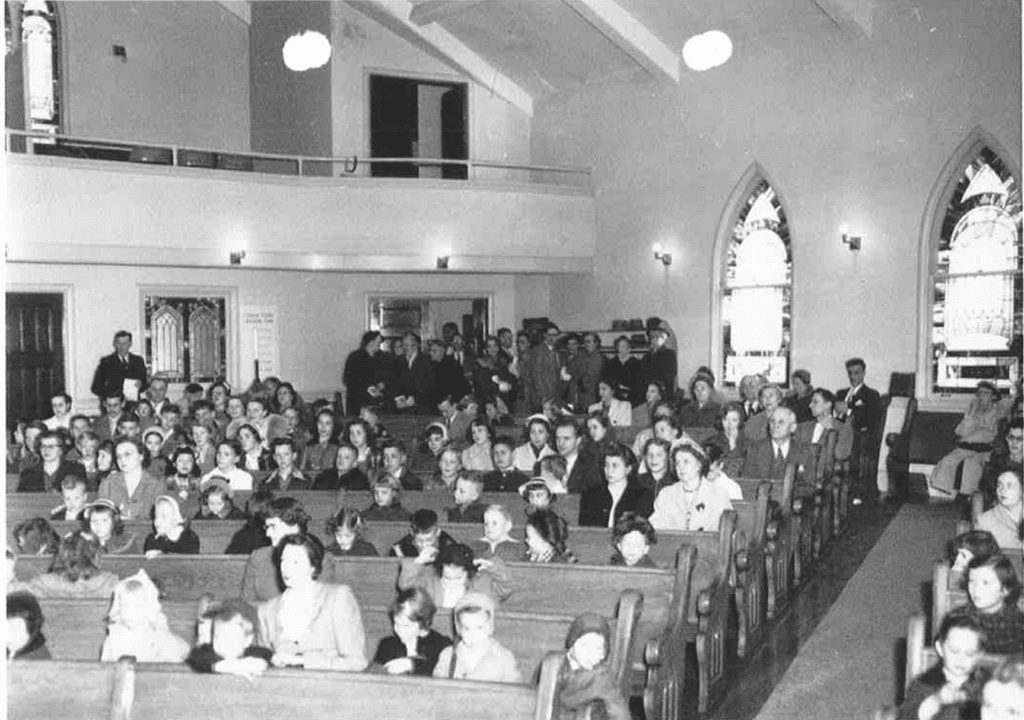
The Liberty Park congregation gathers in its sanctuary. (Photo ca. 1957.)
Source: The Church is The People, Volume 1: A History of Liberty Park Methodist Church 1905-1959 by Fred Tobie
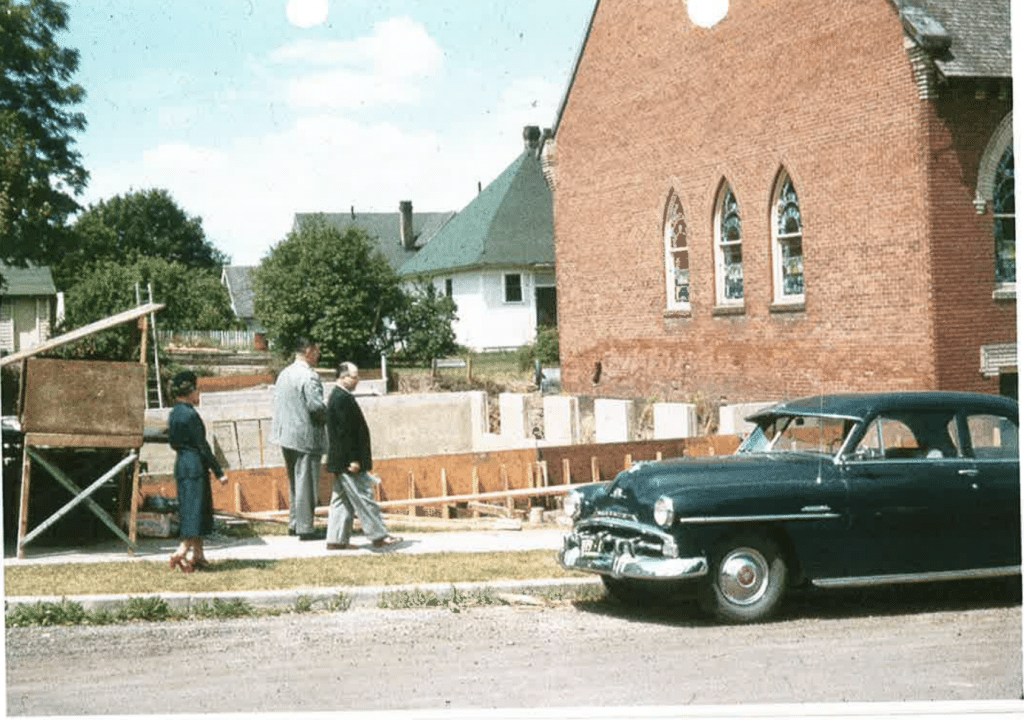
The first structure at the site was a bungalow constructed in 1907. The bungalow was torn down and replaced by a Fellowship Hall in 1957, providing offices, meeting places, a kitchen, and nursery. (Photo ca. 1956.)
Source: The Church is The People, Volume 1: A History of Liberty Park Methodist Church 1905-1959 by Fred Tobie
-
Stop 10: Spokane's First Golf Course
Spokane's First Golf Course
Did You Know?
- Streetcars provided easy access to the clubhouse and golf course from downtown Spokane. The streetcar line terminated at Newark Street, from where a team of horses pulling a cart brought the golfers up to the clubhouse.
- The first tee of Spokane’s original golf course was located in front of the clubhouse, while the fairways were on the opposite side of the street. Golfers teed off across what is now South Perry Street to play the city’s first nine-hole course.
- After its introduction, golf quickly gained popularity in Spokane, and Spokane Country Club hosted many important tournaments, including the first U.S. Women’s Open Championship in 1946, won by Patty Berg. That championship remains the only U.S. Women’s Open played in a match play format.
- Spokane has produced a number of notable professional golfers including Peggy Conley, Larry Laoretti, and Al Mengert.
The Golf Course’s Story
Before urban development transformed the Liberty Park neighborhood, Spokane’s first golf course and clubhouse were located near 14th Avenue and South Perry Street.
Although golf was growing in popularity nationwide in the 1890s, the sport did not reach Spokane until1897, when prominent attorney Henry Hoyt returned from a trip to Philadelphia with a newfound hobby—golf! With no local course available, he proposed creating a backyard course at the home of Winifred and F. Lewis Clark, the mining entrepreneurs who later donated 21 acres of land for Liberty Park. A temporary course was set up in their backyard for family and friends. Winifred Clark developed a strong interest in the game and even sought out instruction.
Interest in golf grew quickly and led the Clarks, Hoyt, and other prominent Spokane residents to form the first Spokane Country Club in June 1898. The group established a simple nine-hole course between 12th and 14th Avenues east of South Perry Street. The course featured sand greens and tomato cans for the nine holes.
Despite its modest design, the course reflected golf’s rapid rise in popularity. In 1904, as interest continued to grow, the Spokane Country Club relocated the course to Hart Field at 37th Avenue and Grand Boulevard, where it introduced grass greens and hired its first groundskeeper. After the Hart Field clubhouse burned in 1908, members purchased 140 acres of farmland along the Little Spokane River for a new course. Some members objected to the distance from the city, and the disagreement eventually led a group to establish what became Manito Golf Club in 1917.
Although the original course operated for only six years, the clubhouse associated with Spokane’s first golf course remains in the South Perry neighborhood as a reminder of the birth of golf in Spokane.
Learn More
Elston, Bill. Golf History of Spokane, Washington: A 101 Year Tradition. Team Elston Sports, 1999.
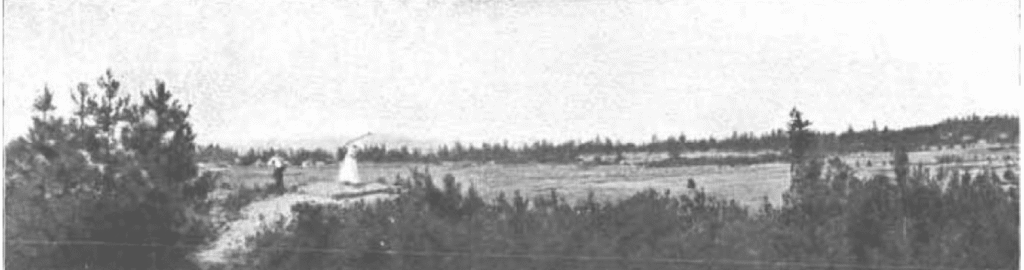
Hole #1 tee at Spokane Country Club in 1901. (Photo ca. 1901.)
Source: Photo courtesy of Golf USGA Bulletin
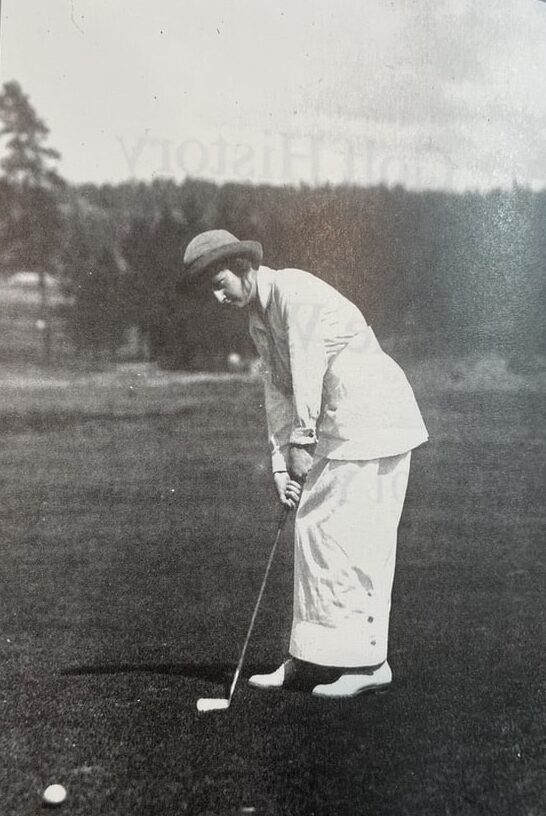
Women enjoyed playing golf in Spokane in the early 1920s. (Photo ca. 1920.)
Source: Photo courtesy of the Golf History of Spokane, Washington: A 101 Year Tradition by Bill Elston
-
Landmark 1: 603 South Arthur Street (Dodd House)
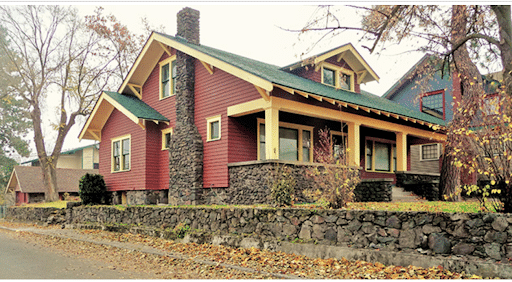
This residence was the home of Sonora Smart Dodd, known as the “Mother of Father’s Day,” who was inspired by her single father, a Civil War veteran. Her close relationship with her father, and her respect for his selflessness and sacrifices, inspired her to advocate for the creation of Father’s Day. (Photo ca. 2008.)
Source: Photo courtesy of Spokane City/County Historic Preservation Office
Sonora Smart Dodd (1882–1978) is recognized as the founder of Father’s Day, inspired by the devotion of her father, Civil War veteran William Jackson Smart, who raised six children after the death of his wife. From her Spokane home, she led a decades-long campaign that began with the nation’s first Father’s Day celebration in Spokane in 1910 and culminated in the holiday’s official national recognition in 1972. The 1913 Dodd House, a Craftsman-style bungalow in Spokane’s East Central neighborhood, is significant both as her longtime residence and as the place most closely associated with her enduring legacy. The Dodd House was listed on the National Register of Historic Places in July 2010.
-
Landmark 2: 1026 East Newark Avenue
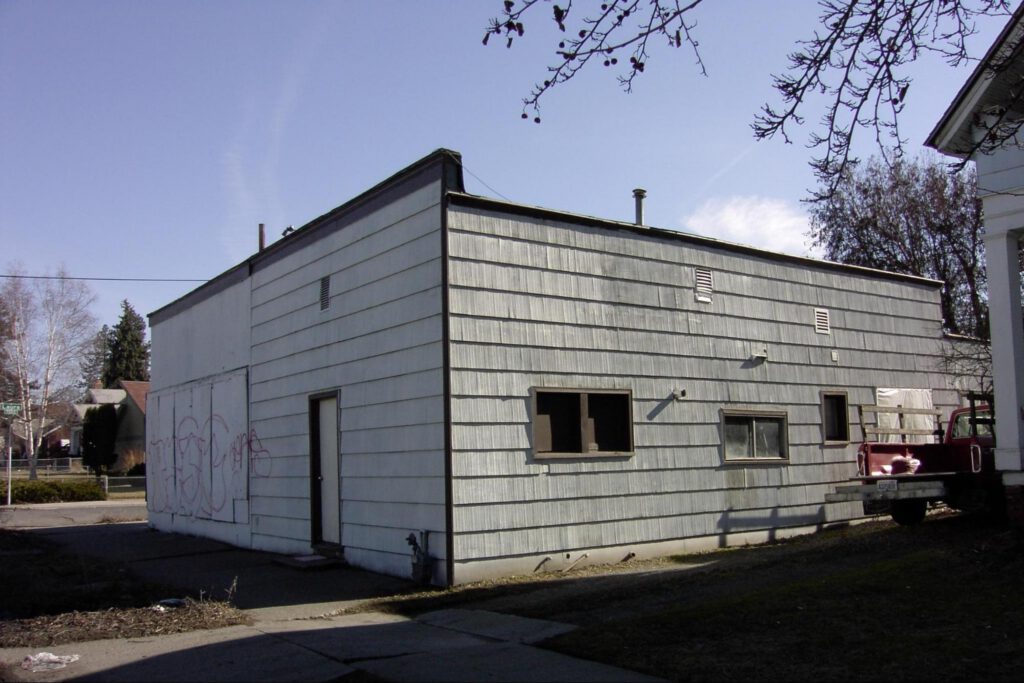
This building served as a barber shop and neighborhood grocer. (Photo ca. 2006.)
Source: Washington Department of Archaeology and Historic Preservation
Historical Timeline
- 1926Built by Garret and Lucy Brackenhoff
- 1926-1990sBarber shop and a variety of grocery stores
- 1960sGreggory’s Grocery
- 1960s-2018Residence (apartment in the back)
- 2018The Grain Shed
-
Landmark 3: 1004 East Eighth Avenue
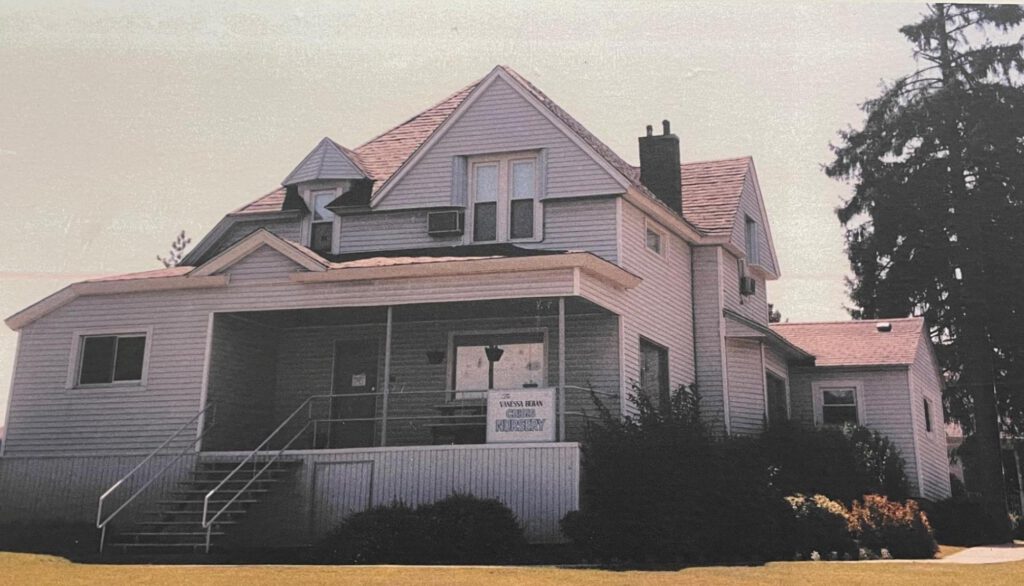
Vanessa Behan opened in a home in 1987 and expanded over time. (Photo ca. 1987.)
Source: Photo courtesy of Vanessa Behan
Historical Timeline
- 1987Vanessa Behan Crisis Nursery opened in a home on East Eighth Avenue
- 2000New Vanessa Behan facility is opened
- 2022Vanessa Behan moves to a new facility on East Sprague Avenue
- 2022Maddie’s Place opens
- 1997-2024Gopher’s Shop operates on 1015 East Ninth Avenue
- 2024Maddie’s Place purchases Gopher’s Shop and the associated property to support their expansion efforts
-
Landmark 4: 924 South Perry Street
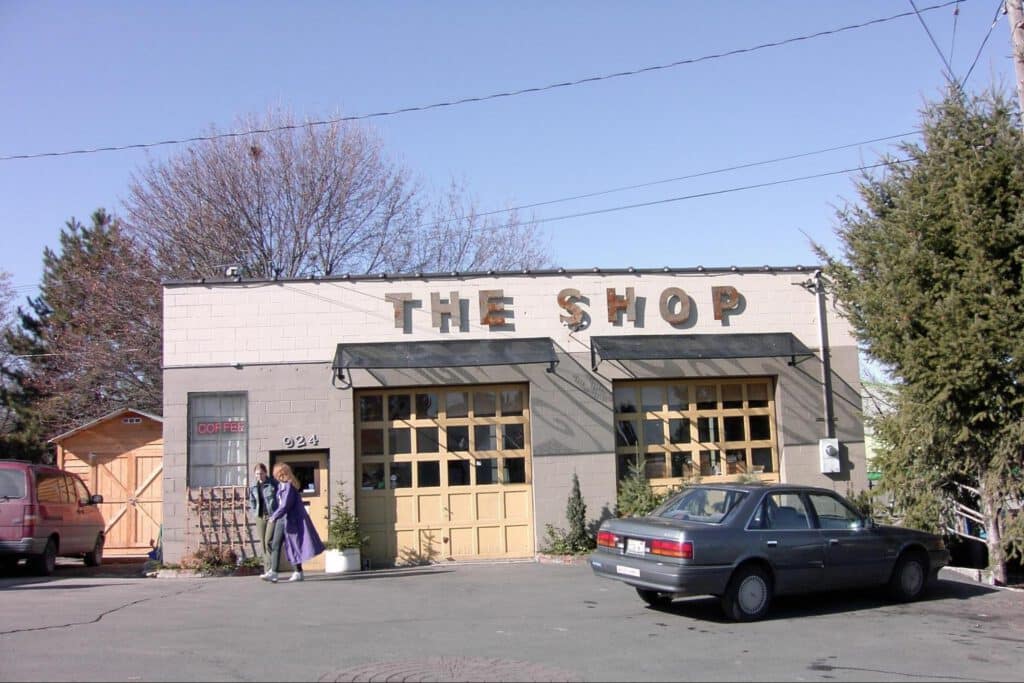
The Shop coffee house opened in 1999 and played an essential role in revitalizing the South Perry District in the early 2000s. (Photo ca. 2006.)
Source: Washington Department of Archaeology and Historic Preservation
Historical Timeline
- 1947Building is constructed and operates as an auto service station
- 1955-1969Perry Service Station
- 1999The Shop Coffee House
-
Landmark 5: 928 South Perry Street
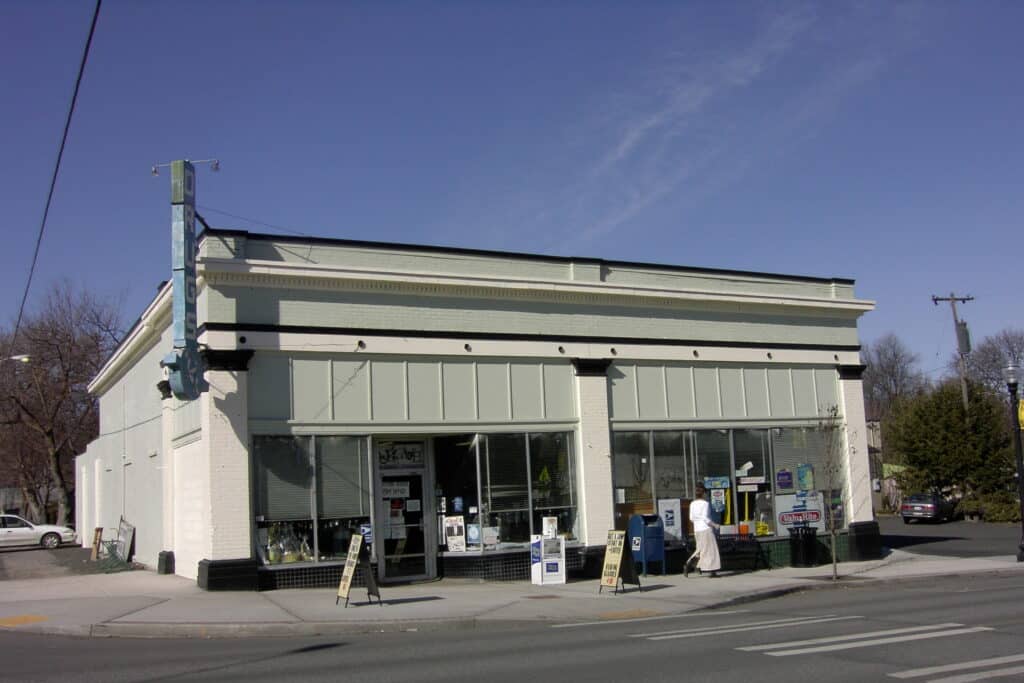
The Altamont Pharmacy and a post office operated at this location from 1963-2009. (Photo ca. 2006.)
Source: Washington Department of Archaeology and Historic Preservation
McEachran Block
Historical Timeline
- 1910Building constructed
- 1910McEachran Grocery and Meat Market
- 1924 Crosby Meats and Grocery
- 1924 Baldwin Meats and Tommy’s Meats
- 1940s-1953Bolkan’s Cafe
- 1960s Building remodeled
- 1963-2009Altamont Pharmacy and post office moved from Hoxsey Block (1002 South Perry Street)
- 2011Title Nine
- 2012-2022Casper Fry
- 2022Francaise
-
Landmark 6: 1012 South Perry Street
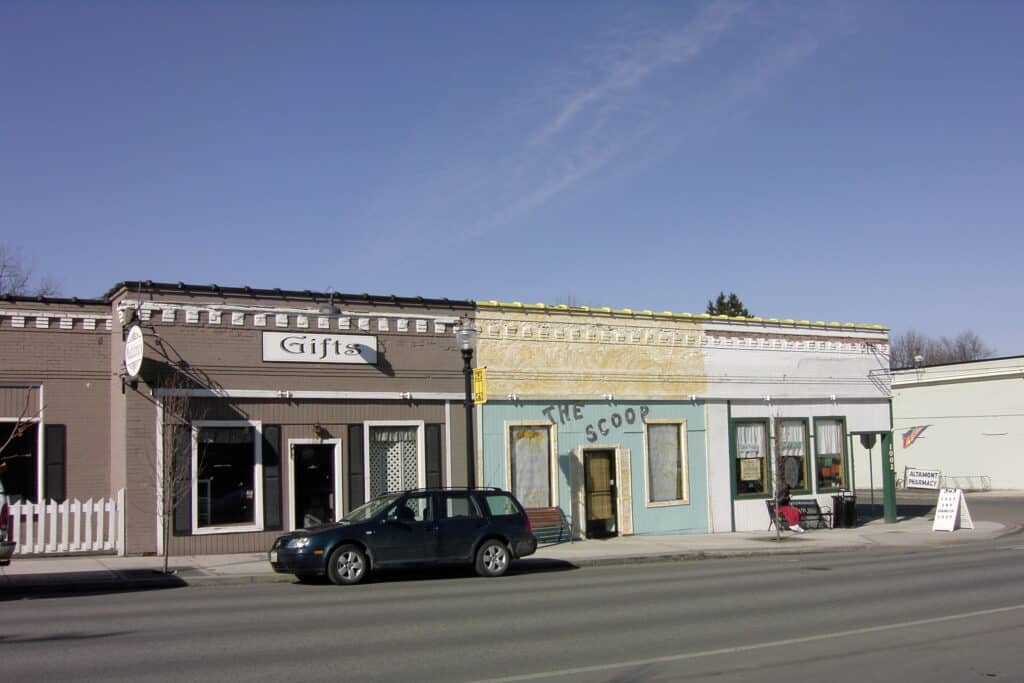
The Hoxsey Block was one of the first commercial anchors in the South Perry Commercial District. Built by Dr. Thomas Hoxsey in 1910, this block contributed to the health, welfare and social needs of the South Perry neighborhood. (Photo ca. 2006.)
Source: Washington Department of Archaeology and Historic Preservation
Perry Street Branch of the Spokane Public Library served the neighborhood for over 65 years. (Photo ca. 1976.)
Source: Photo courtesy of Spokane Public Library
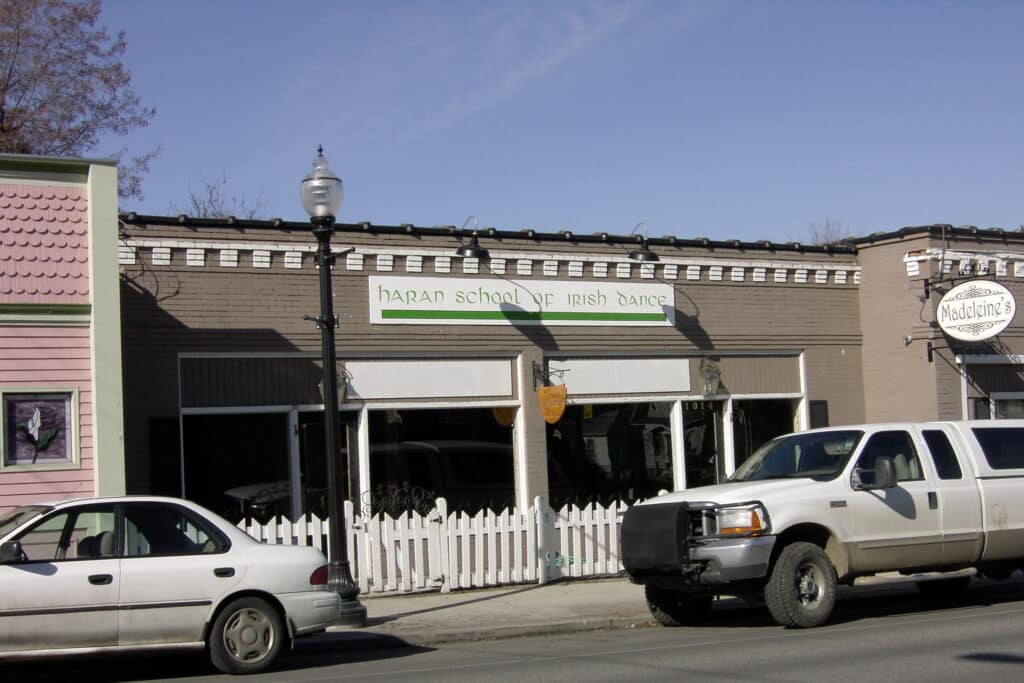
Built in 1910 and 1939, the Hoxsey Block includes two adjoining commercial buildings. The 1939 building is set back five feet from the adjoining 1910 building. (Photo ca. 2006.)
Source: Washington Department of Archaeology and Historic Preservation
Hoxsey Block
Historical Timeline
- 1910Built by Dr. Thomas Hoxsey; Dr. Hoxsey and his wife, Leita, owned this property for 54 years.
- 1911Altamont Pharmacy opened
- 1912South Perry Branch of the Spokane Library opened
- 1920-1930sGrocery store and Richard Park Meat Market
- 1939An addition was constructed (see details under Addition Built in 1939)
- 1940sThue’s Dime and Variety Store
- 1950sLynch Variety Store
- 1963Irene’s Antiques and Gifts
- 1965Able Electronics and TV
- 1970sWestern Cycle and Repair
- 1990sGertrude’s Black Forest Deli
- 2003Perry Street Soup Pot
- 2006-2012Perry Street Cafe
- 2009Lantern Tavern (South bay)
- 2021South Perry Lantern
Addition Built in 1939
- 1968-1976Perry Branch of Spokane Public Library moved from the adjoining building to the addition
- 1976Brothers Furniture Stripping, Real Estate Appraisals Unlimited
- 1989-1996Spokane Aids Network
- 1998-2003Madeleine’s Antiques and Home Furnishings
- 2003-2005Neat Old Stuff
- 2006Haran School of Irish Dance
- 2015Roots Salon
-
Landmark 7: 1020 South Perry Street
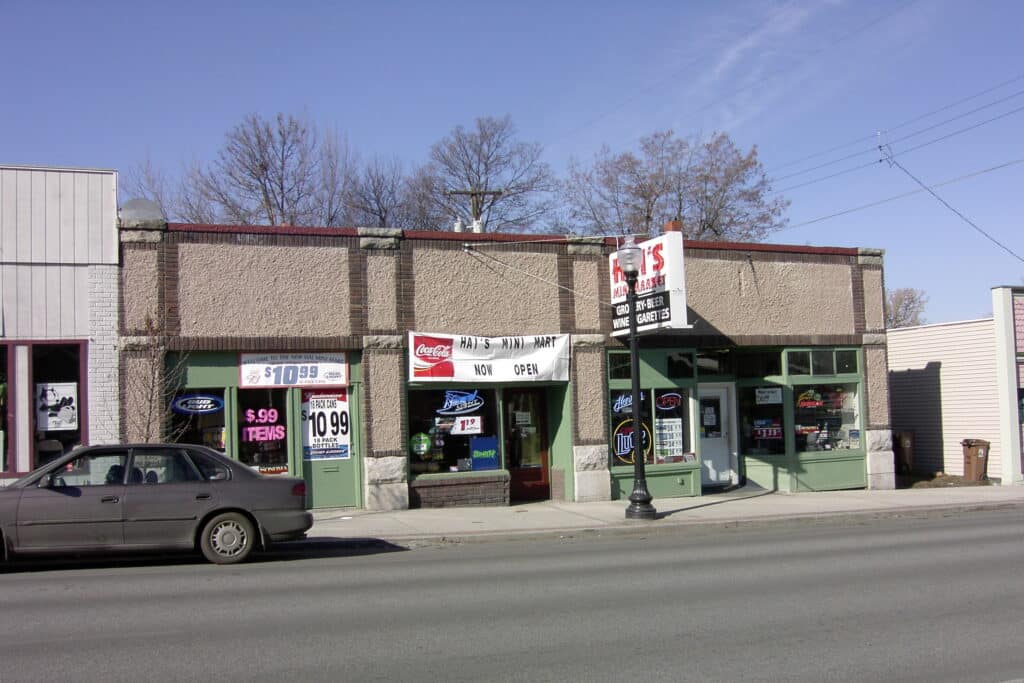
This building is known as the Walser Block. It housed a wide variety of businesses from a lunch diner to a taekwondo studio. (Photo ca. 2006.)
Source: Washington Department of Archaeology and Historic Preservation
Walser Block
Historical Timeline:
- 1920Built by bricklayer Evan Walser. Known as the Walser Block
- 1929Matthews Shoe Repair, Burnham Plumbing Office
- 1935Paul Steinke Jewelry, Grocer
- 1940sShoe Repair, Steinke Grocer
- 1950sModern Ice Cream Shop, Midge’s Lunch and Confectioneries
- 1970sMiller’s Shoe Repair, Concept Upholstery
- 1985Shalom United Church of Christ
- 1995Magic Custom Furniture and Cabinets
- 2003Tekwon Do America
- 2004-2013Hai’s Mini Mart
- 2014-2024Vacant
- 2024Pacific to Palouse Wine Bar and Indicana
-
Landmark 8: 1024 South Perry Street
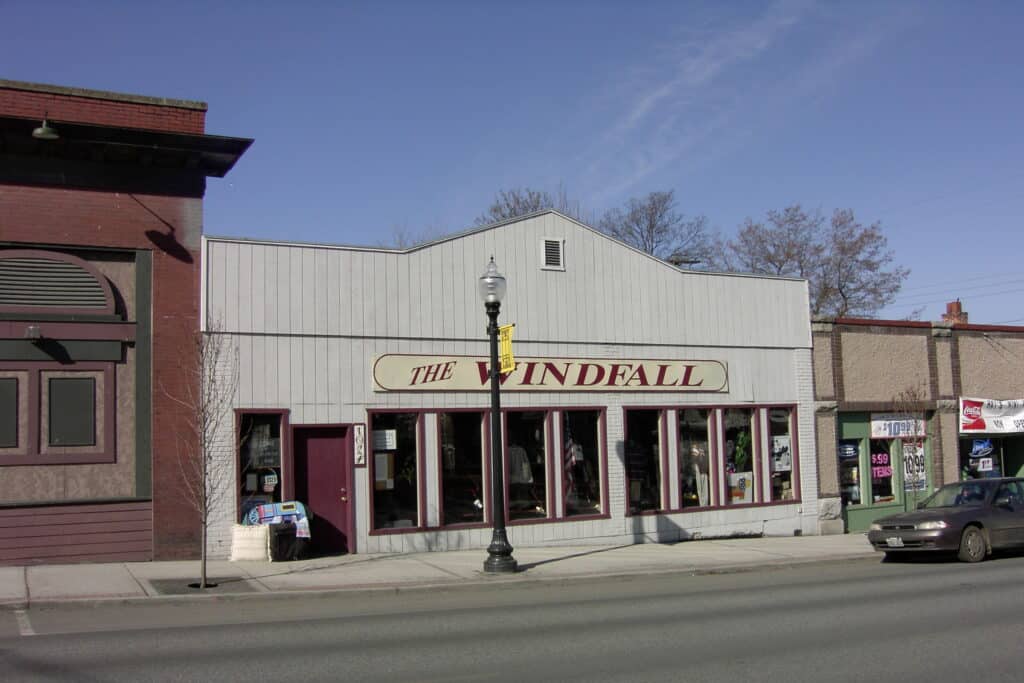
The Windfall has served the community since 1966. (Photo ca. 2006.)
Source: Washington Department of Archaeology and Historic Preservation
Historical Timeline
- 1910Building was constructed
- 1910-1940Home to a variety of grocery stores such as MacMar Grocery Store
- 1944Bowles Hardware
- 1966Windfall Thrift Store
Learn More
Windfall Thrift Store gives $5000 to Liberty Park Community
Spokesmen Review January 25, 2026
-
Landmark 9: 1026 South Perry Street
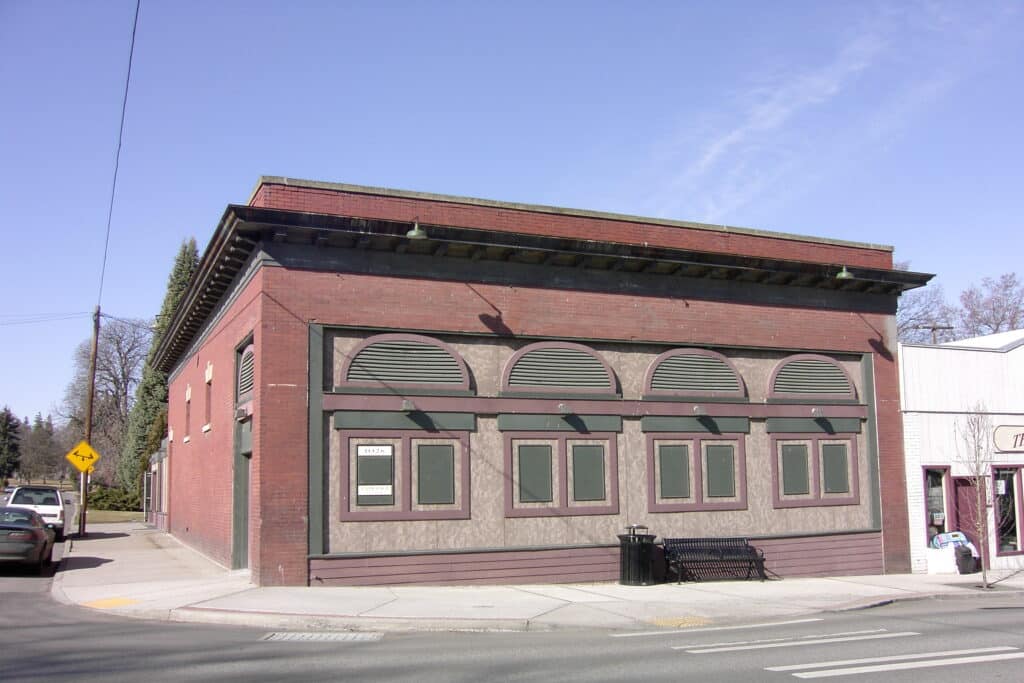
This building was known as the Lander Block and housed a variety of grocery stores from 1913 to 1955. (Photo ca. 2006.)
Source: Washington Department of Archaeology and Historic Preservation
Lander Block
Historical Timeline
- 1913Constructed for Alex and Catherine Lander and known as the Lander Block
- 1922Richland Park Grocery Store
- 1925Kailine Grocery and Bray’s Barber Shop operated from the building
- 1935South Side Table Supply Company Grocery
- 1940Stone’s Food Stores and Meats
- 1950E.H. Grocery and M.D. Jones Meats
- 1955-1970Helphery’s IGA Grocery and Bill’s Meats
- 1971Stewart’s Sandwiches
- 1990Spokane Stair Company
- 1994Photography Studio
- 1998JCSP Photography
- 2023Little Fish Productions
-
Landmark 10: 1801 East 11th Avenue
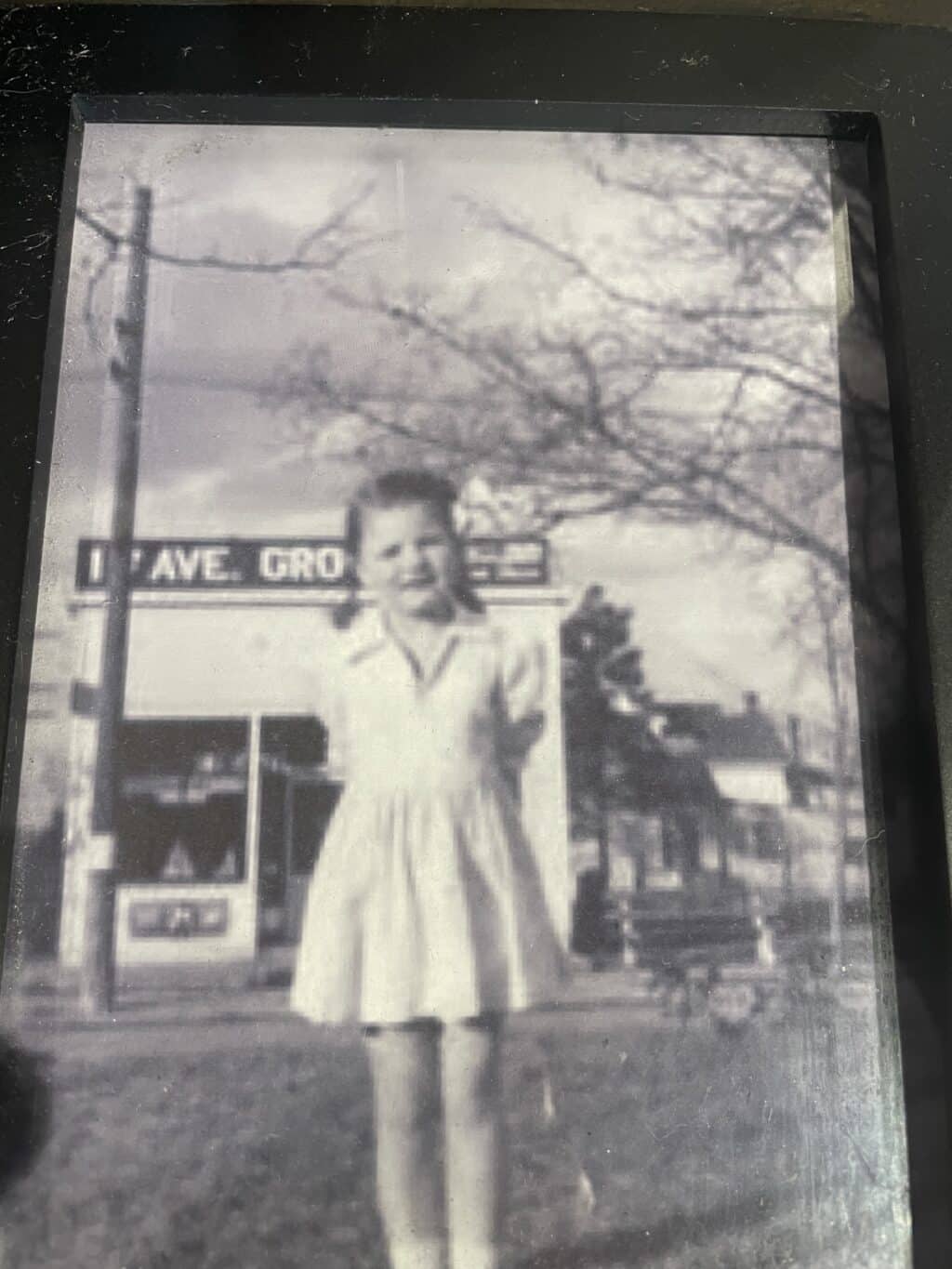
Woosley’s Grocery Store operated at this location from 1925 to 1974. (Photo ca. 1940.)
Source: Photo courtesy of Meeting House Cafe
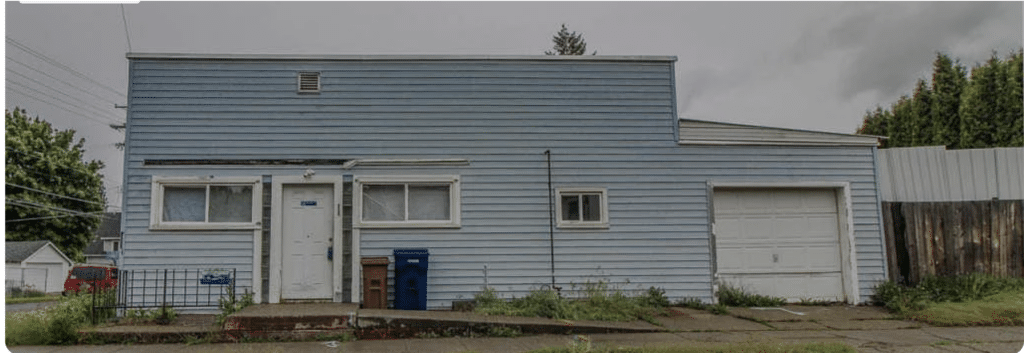
After the grocery store closed, this building was a private residence from 1974 to 2018. (Photo ca. 2018.)
Source: Photo courtesy of Meeting House Cafe
Historical Timeline
- 1925Building was constructed
- 1925William Woolsey opened Woolsey’s Grocery Store
- 1974Woosley’s Grocery Store closed
- 1974-2018Building used as a private residence
- 2020Meeting House Cafe opened
-
Landmark 11: 1410 East 11th Avenue
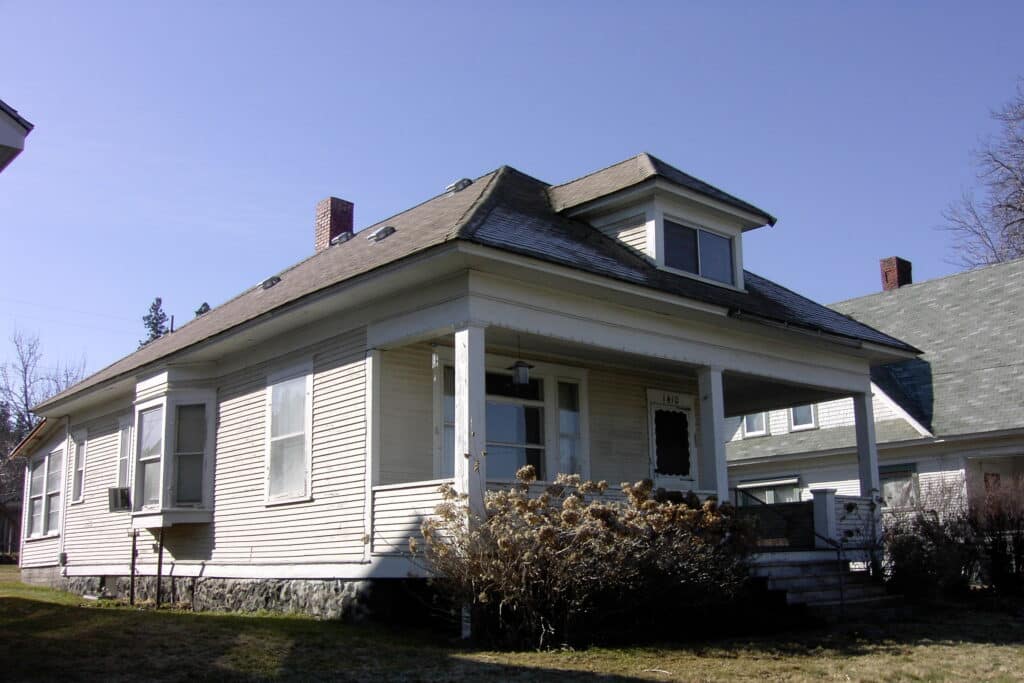
The Dobler home remained a single family residence until 2019. (Photo ca. 2006.)
Source: Washington Department of Archaeology and Historic Preservation
Historical Timeline
- 1907Built for Lee Dobler and remained a single family residence until 2019
- 2019Wishing Tree Books
-
Landmark 12: 1106 South Perry Street
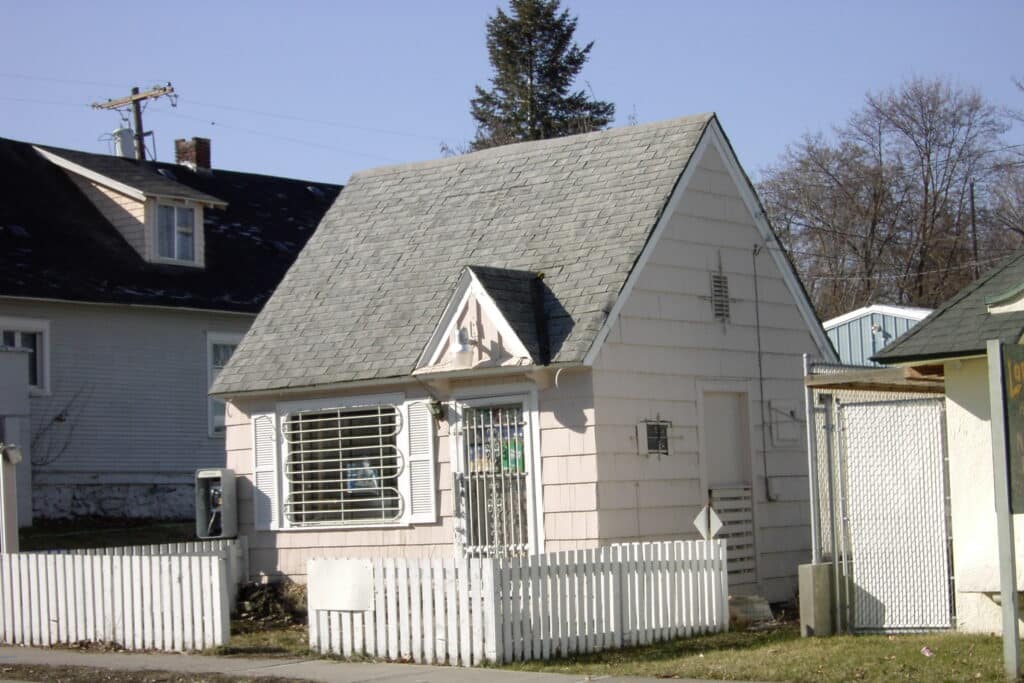
This small space has served the community as a variety of businesses from a creamery to a watch repair shop. (Photo ca. 2006.)
Source: Washington Department of Archaeology and Historic Preservation
Historical Timeline
- 1929Mrs. B.A. Robbins managed a grocery and confectionery shop at this location
- 1940Benewah Creamery
- 1955Post Office
- 1960sWatch Repair Shop
- 1995Dog Grooming by Lori
- 2003Sports Card Shop
- 2010Veda Lux
-
Landmark 13: 1110 South Perry Street
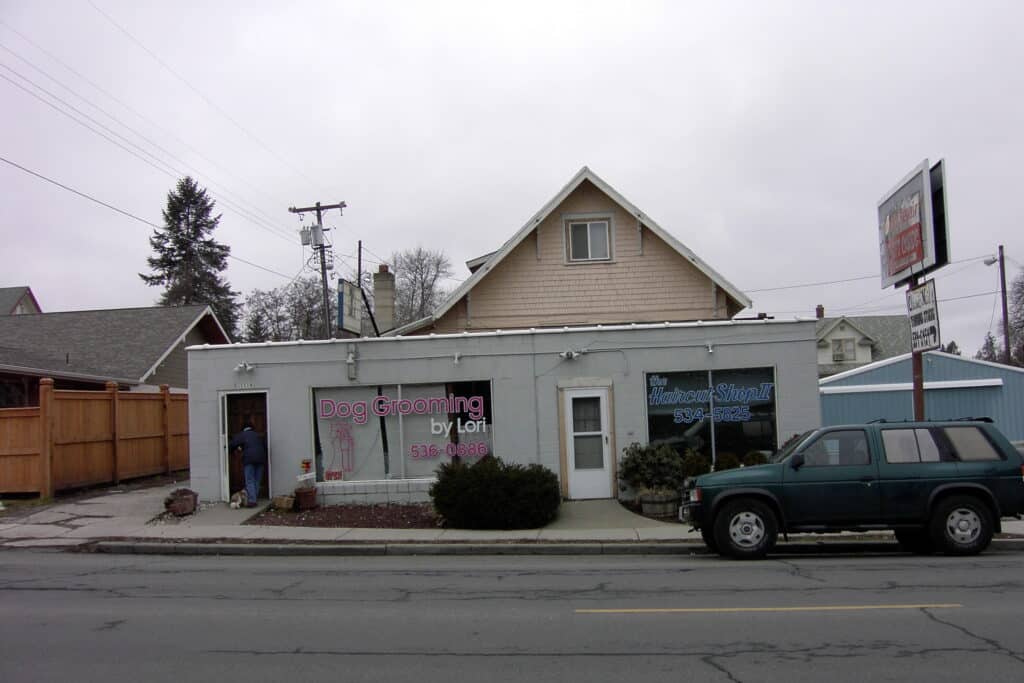
Several beauty salons operated at this location. (Photo ca. 2006.)
Source: Washington Department of Archaeology and Historic Preservation
Historical Timeline
- 1904The house was constructed
- 1933Patterson Cookie Company operated out of the house for 30 years
- 1953A commercial addition made up of two suites was constructed in front of the original house and first leased to Paris Liberty Cleaners and Charles Giles Offices, followed by multiple other businesses
North Suite (1110 South Perry Street)
- 1970Jean’s Beauty Shop
- 1980Hair Craft
- 1985Hair Cut Shop II
- 2012-2019Him & Her Vintage Furniture
- 2019Perry Street Tattoo
- 2021Perry Street Barber
- 2003Dog Grooming by Lori moved to this location from 1106 South Perry Street
- 2017-2019Tsuga Northwest Arts (art co-op)
- 2019-2020Bee You Organics
- 2020-2025Perry Street Tattoo
- 2025South Perry Aesthetics
-
Landmark 14: 1121 South Perry Street
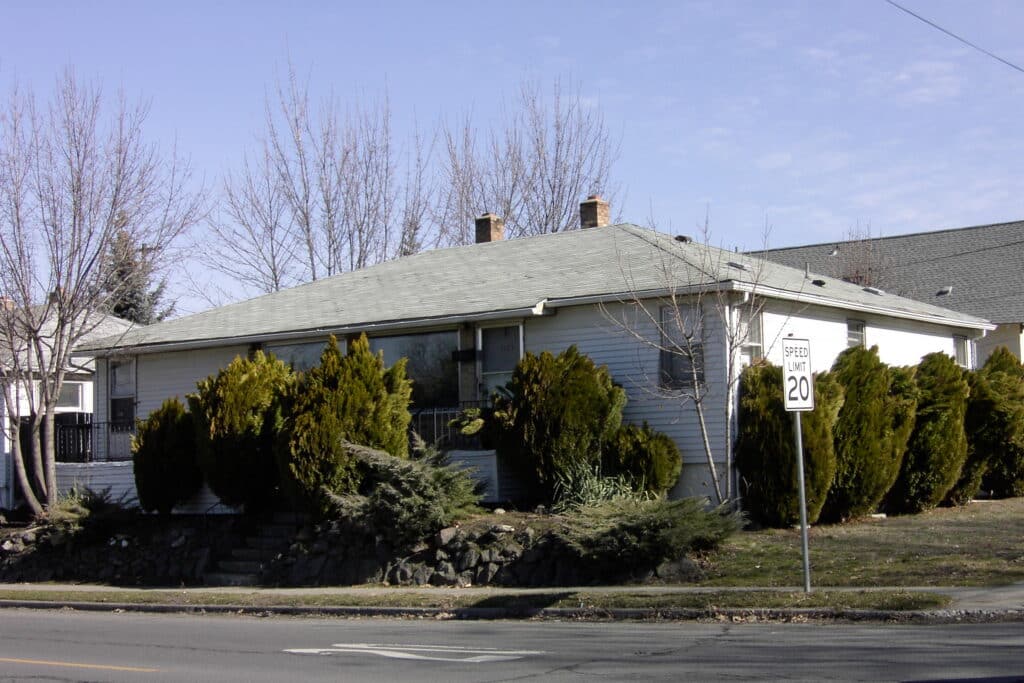
Former residences have been converted to house the businesses of the South Perry District. This duplex became home to Odyssey Youth Movement in 2006. (Photo ca. 2006.)
Source: Washington Department of Archaeology and Historic Preservation
Historical Timeline
- 1951Eberlee duplex constructed
- 2006Odyssey Youth Movement
Do you have something to share about the history of South Perry?
If you have historical documents, photographs, or other information to contribute to this project, we invite you to email us directly at info@southperry.org.

Explore local history resources to learn more
If you want to learn more about the history of the South Perry District, here are some useful resources:
Spokane Public Library Inland Northwest Special Collections
East Central Neighborhood Heritage Tour
East Central Historical and Cultural Context
Spokane City/County Historical Preservation Office
Yeomans, Linda. Historic Resources Inventory: Grant Park/Liberty Park Neighborhood in East Central Spokane.
Spokane City/County Historic Preservation Office, 2006.